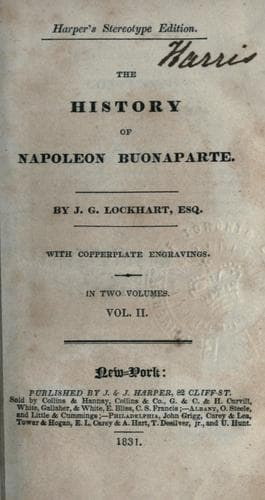
The History of Napoleon BuonaparteLockhart, J. G. (John Gibson)
History
The History of Napoleon Buonaparte
Lockhart, J. G. (John Gibson)
France -- Kings and rulers -- Biography; Napoleon I, Emperor of the French, 1769-1821
On the 18th of May Great Britain declared war. Orders had previously
been given for seizing French shipping wherever it could be found, and
it is said that 200 vessels, containing property to the amount of three
millions sterling, had been laid hold of accordingly, ere the
proclamation of hostilities reached Paris. Whether the practice of thus
unceremoniously seizing private property, under such circumstances, be
right on abstract principle, or wrong, there can be no doubt that the
custom had been long established, acted upon by England on all similar
occasions, and of course considered, after the lapse of ages, and the
acquiescence of innumerable treaties, as part and parcel of the European
system of warfare. This was not denied by Napoleon; but he saw the
opportunity, and determined to profit by it, of exciting the jealousy of
other governments, by reclaiming against the exercise, on the part of
England, of a species of assault which England, from her maritime
predominance, has more temptations and better means to adopt than any
other power. He resolved, therefore, to retaliate by a wholly
unprecedented outrage. The very night that the resolution of the cabinet
of St. James's reached Paris, orders were given for arresting the
persons of all English subjects residing or travelling within the
dominion of France.
Not less than 10,000 persons, chiefly of course of the higher classes of
society, thus found themselves condemned to captivity in a hostile land.
Had Napoleon adopted less violent measures, his reclamations against the
English government might have been favourably attended to throughout
Europe. But this despotic and unparalleled infliction of exile and
misery on a host of innocent private individuals, was productive of far
different effects. It moved universal sympathy, indignation, and
disgust.
[Footnote 42: See Wordsworth's verses, "written at Calais the 15th Aug.
1802," in which the indifference of the people is contrasted with their
enthusiasm in the early days of the Revolution.
"Festivals have I seen that were not names:--
This is young Buonaparte's natal day;
And his is henceforth an established sway,
Consul for life. With worship France proclaims
Her approbation, and with pomps and games
Heaven grant that other cities may be gay!
Calais is not: and I have bent my way
To the sea coast, noting that each man frames
His business as he likes. Another time
That was, when I was here long years ago,
The senselessness of joy was then sublime!" &c.
]
[Footnote 43: Witness, among other evidences, the noble sonnet of
Wordsworth:--
Public-domain text, read in full here on John Shaqi.
Reviews
Reviews
No reviews yet
Be the first to share your thoughts on this work.
Elsewhere in the archive
Join the Discussion
Join the discussion
Sign in to leave a comment or review.
Sign InorCreate an account