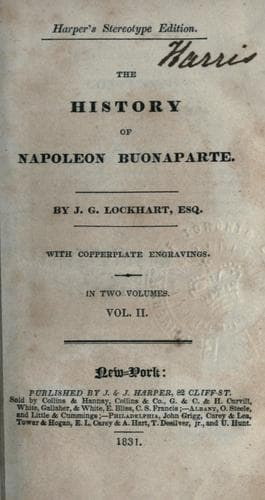
The History of Napoleon BuonaparteLockhart, J. G. (John Gibson)
History
The History of Napoleon Buonaparte
Lockhart, J. G. (John Gibson)
France -- Kings and rulers -- Biography; Napoleon I, Emperor of the French, 1769-1821
Egypt, a province of the Ottoman empire, then at peace with France, was
of course wholly unprepared for this invasion. The Turks, however,
mustered what force they could, and, shutting the gates of the city,
held out--until a division, headed by Napoleon in person, forced their
way, at three in the morning, through the old crumbling walls, and it
was no longer possible to resist at once superior numbers and European
discipline. Two hundred French died in the assault; the Turkish loss was
much greater: and, if we are to believe almost all who have written
concerning this part of his history, Buonaparte, after taking
possession, abandoned the place for three hours to the unbridled licence
of military execution and rapine--an atrocity for which, if it really
occurred, there could have been only one pretext; namely, the urgent
necessity of striking awe and terror into the hearts of the population,
and so preventing them from obeying the call of their military
chieftains, to take arms in defence of the soil. De Bourienne and
Berthier, however, wholly deny this story.
If Napoleon's conduct on this occasion was as it has been commonly
represented, it was strangely contrasted with the tenor of his _General
Order_ to the army, issued immediately before their disembarkation.
"The people," he then said, "with whom we are about to live, are
Mahometans; the first article of their faith is, _There is no God but
God, and Mahomet is his Prophet._ Do not contradict them: deal with them
as you have done with the Jews and the Italians. Respect their muphtis
and imans, as you have done by the rabbis and the bishops elsewhere....
The Roman legions protected all religions. You will find here usages
different from those of Europe: you must accustom yourselves to them.
These people treat their women differently from us; but _in all
countries he who violates is a monster; pillage enriches only a few; it
dishonours us, destroys our resources, and makes those enemies whom it
is our interest to have for friends_."
To the people of Egypt, meanwhile, Napoleon addressed a proclamation in
these words:--"They will tell you that I come to destroy your religion;
believe them not: answer that I come to restore your rights, to punish
the usurpers, and that I respect, more than the Mamelukes ever did, God,
his Prophet, and the Koran. Sheiks and Imans, assure the people that we
also are true Mussulmans. Is it not we that have ruined the Pope and the
Knights of Malta? Thrice happy they who shall be with us! Woe to them
that take up arms for the Mamelukes! they shall perish!"[24]
Public-domain text, read in full here on John Shaqi.
Reviews
Reviews
No reviews yet
Be the first to share your thoughts on this work.
Elsewhere in the archive
Join the Discussion
Join the discussion
Sign in to leave a comment or review.
Sign InorCreate an account