The History of Parliamentary Taxation in England — John Shaqi
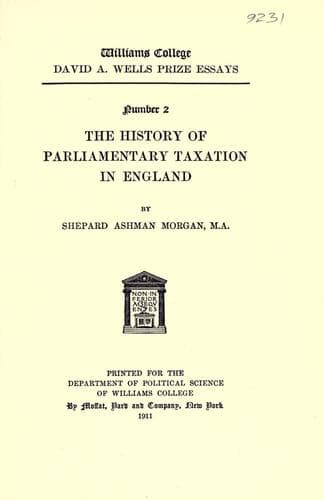
The History of Parliamentary Taxation in EnglandMorgan, Shepard Ashman
History
The History of Parliamentary Taxation in England
Morgan, Shepard Ashman
Taxation -- Great Britain; Taxation -- Great Britain -- History
The effort to raise so great a sum revived all the forms of taxation
known to England in earlier years, and laid the basis for certain
methods of acquiring money previously unknown. The justiciars _took_
“from every knight’s fee twenty shillings,[50] and the fourth part of
all the incomes of the laity, and all the chalices of the churches,
besides the other treasures of the church. Some of the bishops, also,
took from the clergy the fourth part of their revenues, while others
took a tenth for the ransom of the king.”[51] In addition to the
property there stated as having been levied upon, the lands of tenants
in socage yielded two shillings on the hide or carucate,[52] personal
property to the amount of a fourth of its value, and the wool of the
Cistercians and Gilbertines. Thus every person in the kingdom, was laid
under contribution. Later kings found all of these means of raising
revenue exceedingly fruitful, and some of them served as precedents for
taxes which played great parts in the struggle for the control of the
public purse.[53]
[The king is the authority for the taxes]
The authority by which the impositions were laid was apparently solely
that of the king. Speaking of the letter which Richard addressed to his
mother and the justiciars, urging upon them the necessity for raising
money for the ransom, the Chronicler says, “Upon the authority of this
letter the king’s mother and the justiciars of England determined that
all the clergy as well as the laity ought to give ... for the ransom of
our lord the king.” He speaks of the exactions having been _taken_. The
fact that there is no definite record of deliberation or even of assent
by the National Council to the enormous demand which the ransom of the
king laid upon England, and that no serious objection was raised to
the collection, ordered upon the authority of queen and justices, is a
comment both upon the weariness of the nation and its respect for the
ancient feudal aid.
[Richard’s release and subsequent levies]
Public-domain text, read in full here on John Shaqi.
Reviews
Reviews
No reviews yet
Be the first to share your thoughts on this work.
Join the Discussion
Join the discussion
Sign in to leave a comment or review.
Sign InorCreate an account