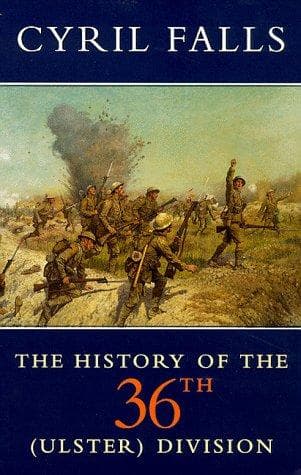
The History of the 36th (Ulster) DivisionFalls, Cyril
History
The History of the 36th (Ulster) Division
Falls, Cyril
Great Britain. Army. Division, 36th; World War, 1914-1918 -- Regimental histories -- Great Britain
A volume might be written--the extent of many a volume probably
has--upon the causes of the failure, for such the whole northern
section of the attack undoubtedly was. This is not the place for a
detailed discussion of them. It may at least be said that, while
the work of the artillery could not have been excelled, the whole
scheme of its employment had not reached anything approaching the
science of the following year. Artillerymen of the higher ranks were
to some extent carried away by the weight of metal for the first
time at their disposal, and carried away other arms by their new
enthusiasm. The heavy gunners believed and proclaimed that no life
could endure their fire, and that the battle would resolve itself
into an advance by the infantry to take over shattered and undefended
trenches. They had not realized that the machine-guns would be
comparatively safe under their bombardment, and that it would take
but a few seconds to bring them into action when the barrage was
past. It is probable that at a later stage of the war a fortress
such as Thiepval would not have been attacked directly by infantry
till it had been first encircled and isolated by its advance, being
kept the while under such artillery fire as would have forced the
machine-gunners to lie low, and then rushed from all sides by bombing
parties. It may be said that our organization at the beginning of
the Somme Offensive was in a transitional stage. We had realized
that defence with the machine-gun had beaten attack, and had begun
the process of increasing the quantity and improving the quality of
mechanical accessories. It was still, however, to cost thousands of
lives before the factories could produce sufficient of the latter,
or the higher commands reach the ratio between infantry force and
mechanical aids necessary to the prosecution of a given operation.
But no explanations that can be found stand without ample tribute to
the fighting qualities of the German soldier. The dash and bravery
of the counter-attacks of the bombers moving up from the valley
merit high praise. The highest, however, must be reserved for the
machine-gunners, who had sat for days in their dug-outs without fresh
food, the very earth shaking to the thunders of our artillery, and
then came up and brought their guns into action at the right moment.
Public-domain text, read in full here on John Shaqi.
Reviews
Reviews
No reviews yet
Be the first to share your thoughts on this work.
Elsewhere in the archive
Join the Discussion
Join the discussion
Sign in to leave a comment or review.
Sign InorCreate an account