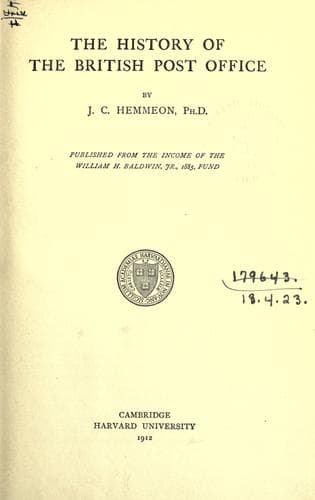
The History of the British Post OfficeHemmeon, Joseph Clarence
History
The History of the British Post Office
Hemmeon, Joseph Clarence
Postal service -- Great Britain -- History
The annual gross receipts from Scotland had increased from £117,108
during the period 1800-04 to £204,481 during the period 1830-34, the
annual net receipts for the same periods being £98,156 and £149,752. The
relatively large increase in expenses from £18,952 to £54,729 had been
due largely to the payment of mail coach tolls after 1814, amounting to
something under £20,000 a year.[727] Ireland started with a smaller
gross revenue, £92,745 a year during the period 1800-04, but a larger
annual expenditure £64,368,[728] and comparatively small net receipts of
£28,377. Gross receipts, expenses, and net receipts had increased slowly
throughout the first thirty-four years of the nineteenth century with
the exception of the period 1820-24. For the five years from 1830 to
1834 inclusive they amounted to £244,098, £108,898, and £135,200
respectively.[729]
[727] See Appendix, p. 248, Table V.
[728] Ireland had paid for mail coach tolls from the first and this
partly explains the relatively high expenditure.
[729] See Appendix, p. 248, Table V.
The increases in rates in 1801, 1805, and 1812 had not produced the
desired and expected results. The increase in 1801 had been estimated to
produce £150,000 but results showed that this estimate was too large by
£35,000. In 1805, the additional penny had resulted in an increase of
only £136,000, inclusive of any natural increase of revenue, although it
had been estimated to produce £230,000. The third increase in rates in
1812 proved even less productive. The Chancellor of the Exchequer said
that he expected it to produce £200,000. As a matter of fact the revenue
increased only £77,892 in amount. The fact of the matter was that rates
were already so high that an increase only led to greater efforts to
evade the payment of postage. As a system of taxation the Post Office
had become rigid. It could yield no more with postage as high as it had
been forced by the acts of 1801 and 1805. But, considered primarily as a
taxing medium, and it had been considered as such for 200 years, it
could hardly be called a failure. We flatter ourselves that our idea of
the Post Office is broader in its scope and more utilitarian in its
object but we have the good fortune to live several generations after
1840. What England demanded was revenue and still more revenue, and a
postal system which could produce £70 net for every £100 collected had
some excuse for its existence.
Public-domain text, read in full here on John Shaqi.
Reviews
Reviews
No reviews yet
Be the first to share your thoughts on this work.
Elsewhere in the archive
Join the Discussion
Join the discussion
Sign in to leave a comment or review.
Sign InorCreate an account