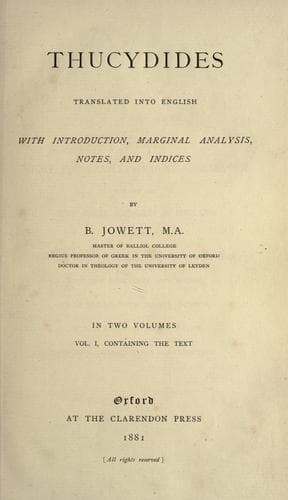
Greece -- History -- Peloponnesian War, 431-404 B.C.
“Such, Lacedaemonians, are the facts. We have gone into them at some
length both on your account and on our own, that you may fed that you
will justly condemn the prisoners, and we, that we have given an
additional sanction to our vengeance. We would also prevent you from
being melted by hearing of their past virtues, if any such they had:
these may be fairly appealed to by the victims of injustice, but only
aggravate the guilt of criminals, since they offend against their
better nature. Nor let them gain anything by crying and wailing, by
calling upon your fathers’ tombs and their own desolate condition.
Against this we point to the far more dreadful fate of our youth,
butchered at their hands; the fathers of whom either fell at Coronea,
bringing Boeotia over to you, or seated, forlorn old men by desolate
hearths, with far more reason implore your justice upon the prisoners.
The pity which they appeal to is rather due to men who suffer
unworthily; those who suffer justly as they do are on the contrary
subjects for triumph. For their present desolate condition they have
themselves to blame, since they wilfully rejected the better alliance.
Their lawless act was not provoked by any action of ours: hate, not
justice, inspired their decision; and even now the satisfaction which
they afford us is not adequate; they will suffer by a legal sentence,
not as they pretend as suppliants asking for quarter in battle, but as
prisoners who have surrendered upon agreement to take their trial.
Vindicate, therefore, Lacedaemonians, the Hellenic law which they have
broken; and to us, the victims of its violation, grant the reward
merited by our zeal. Nor let us be supplanted in your favour by their
harangues, but offer an example to the Hellenes, that the contests to
which you invite them are of deeds, not words: good deeds can be
shortly stated, but where wrong is done a wealth of language is needed
to veil its deformity. However, if leading powers were to do what you
are now doing, and putting one short question to all alike were to
decide accordingly, men would be less tempted to seek fine phrases to
cover bad actions.”
Public-domain text, read in full here on John Shaqi.
Reviews
Reviews
No reviews yet
Be the first to share your thoughts on this work.
Elsewhere in the archive
Join the Discussion
Join the discussion
Sign in to leave a comment or review.
Sign InorCreate an account