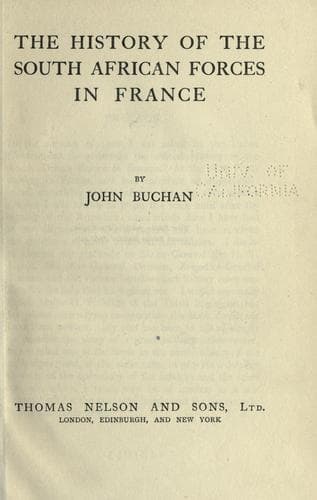
The history of the South African forces in FranceBuchan, John
History
The history of the South African forces in France
Buchan, John
South Africa. Army; World War, 1914-1918 -- Campaigns -- France; World War, 1914-1918 -- Regimental histories -- South Africa
A Corps Signal Company exists primarily to provide communication between
the headquarters of an army corps and the infantry divisions with their
associated divisional field artilleries which constitute a corps. For
this purpose it staffs and equips a Corps Headquarters Signal Office,
including telephone exchange, telegraph and despatch rider offices;
constructs such telegraph and telephone lines to divisions as may be
necessary or possible; provides operators at the divisional ends of the
lines, and runs and maintains local telephone lines to the different
sections of the corps staff, and to the different units of the corps
troops. The corps troops—which are those units directly commanded by
corps headquarters—though negligible at the beginning of the war,
increased enormously with the development of the Heavy Artillery, the
Flying Corps, and the rest of the complicated technique of modern
position warfare, until finally their communications dwarfed all others.
In addition, the Corps Signal Company acts as a repair workshop, and
issue store for the signal material and apparatus required by all units
and formations within the corps; assists with and correlates their signal
arrangements, and provides electric lighting for corps headquarters.
To provide for the night and day working and the manning of an advanced
headquarters, the Headquarter Section was organized in three reliefs,
each under a sergeant superintendent. To increase the number of lines
which can be simultaneously run out during a general move, both Air
Line and Cable Sections were divided into two detachments, each under
a sergeant or corporal. Each air line detachment carried material for
five miles of poled line on its lorries, and, after training, became
capable of erecting this line at the rate of a mile an hour. Each cable
detachment carried nine miles of cable, and learned to lay this out at
the gallop when necessary, or at a normal rate of three miles an hour
along roads where precautions for the preservation of the line had to be
taken.
Public-domain text, read in full here on John Shaqi.
Reviews
Reviews
No reviews yet
Be the first to share your thoughts on this work.
Elsewhere in the archive
Join the Discussion
Join the discussion
Sign in to leave a comment or review.
Sign InorCreate an account