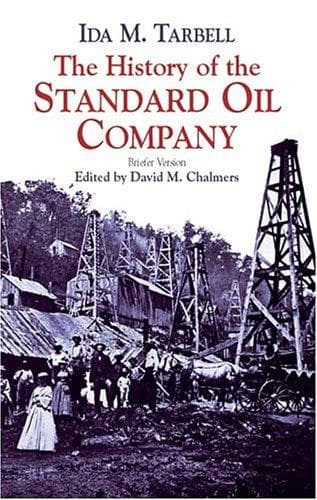
The History of the Standard Oil CompanyTarbell, Ida M. (Ida Minerva)
History
The History of the Standard Oil Company
Tarbell, Ida M. (Ida Minerva)
Petroleum industry and trade -- United States -- History; Standard Oil Company -- History
In June another exasperating episode occurred, growing out of the
attempts of the oil men to secure independent routes to the seaboard. As
we have seen, two enterprises had been launched late in 1877 under the
patronage of the Petroleum Producers’ Union. As soon as the Equitable
had acquired its right of way to Buffalo, Mr. Emery, the head of the
company, his papers in hand, sought an interview with representatives of
the Buffalo and McKean road, and told them if they did not consent that
the Equitable lay a pipe-line to their road, and did not contract to
carry the oil from that connection to Buffalo, the pipe-line to Buffalo
would be laid. After considerable negotiation a contract was made with
the railroad, and by June the new company was ready with pipe-line, cars
and barges to carry oil to New York. But no sooner did they attempt to
begin operations than the railroad, under pressure from the Pennsylvania
Railroad it was claimed, refused to carry out its contracts. The cars
the Equitable ordered sent to the loading track were refused, a side
track it had laid was torn up, the frog torn out; everything, indeed,
was done to prevent the Equitable doing business, though finally a
vigorous appeal to the law brought the road to terms, and in July oil
began to flow Eastward by this indirect route. No sooner did the
Standard find that the Equitable people were really doing business than
they appealed to the railroads. A meeting of the representatives of the
trunk lines was held at Saratoga in July, and the rates on crude
Eastward were dropped to eighty cents to meet the new competition.
While this fight was going on against the Equitable all sorts of
interference were being put in the way of the seaboard line between
Brady’s Bend and Baltimore. It was ridiculed as chimerical to attempt to
pump oil over the mountains, and General Haupt was declared to be a
visionary engineer with a record of failures. All the old stories
retailed in 1876 were dragged out again. The farmers were told that the
leakage from the pipe-line would ruin their fields and endanger their
buildings, and an active campaign to excite prejudice was carried on
again in the farmers’ papers. Philadelphia and Pittsburg both fought the
plan, the press and chambers of commerce opposing the free pipe bill at
that time before the Legislature, and the project generally. In
Pittsburg the opposition created almost a riot, for the oil producers of
the Lower Field, who had long bought their supplies there, now
threatened to boycott the city if the pipe-line was fought. So strong
was the opposition that capital took fright and the company found it
most difficult to secure funds. This opposition to the pipe-line was, of
course, charged against the Standard and the Pennsylvania Railroad.
Public-domain text, read in full here on John Shaqi.
Reviews
Reviews
No reviews yet
Be the first to share your thoughts on this work.
Elsewhere in the archive
Join the Discussion
Join the discussion
Sign in to leave a comment or review.
Sign InorCreate an account