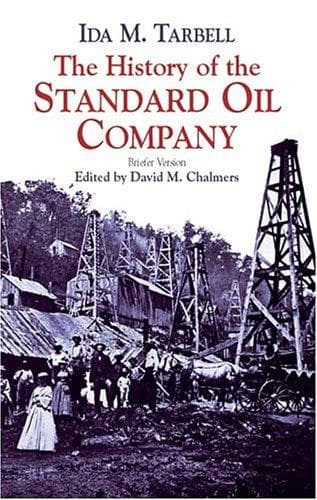
The History of the Standard Oil CompanyTarbell, Ida M. (Ida Minerva)
History
The History of the Standard Oil Company
Tarbell, Ida M. (Ida Minerva)
Petroleum industry and trade -- United States -- History; Standard Oil Company -- History
By the morning of February 20 the Oil Regions knew of the compromise.
The news was received in sullen anger. It was due to the cowardice of
the state officials, the corrupting influence of corporations, the oil
men said. They blamed everybody but themselves, and yet if they had done
their duty the suits would never have been compromised. The simple fact
is that the mass of oil men had not stood by their leaders in the hard
fight they had been making. These leaders, Mr. Campbell the president,
Mr. Sherman the chief counsel, and Mr. Patterson the head of the
legislative committee, had given almost their entire time for two years
to the work of the Union. The offices of Mr. Campbell and Mr. Patterson
were both honorary, and they had both often used their private funds in
prosecuting their work. Mr. Sherman gave his services for months at a
time without pay. No one outside of the Council of the Union knew the
stress that came upon these three men. Up to the decision to institute
the conspiracy suit they had worked in harmony. But when that was
decided upon Mr. Patterson withdrew. He saw how fatal such a move must
be, how completely it interfered with the real work of the Union,
forcing common carriers to do their duty. He saw that the substantial
steps gained were given up and that the work would all have to be done
over again if their suit went on. Mr. Campbell believed in it, however,
and Mr. Sherman, whether he believed in it or not, saw no way but to
follow his chief. The nine months of disappointment and disillusion
which followed were terrible for both men. They soon saw that the forces
against them were too strong, that they would never in all probability
be able to get the conspiracy suit tried, and that so long as it was on
the docket the proper witnesses could not be secured for the suits
against the railroads. Finally it came to be a question with them what
out of the wreck of their plans and hopes could they save? And they
saved what the compromise granted. If the oil producers they
represented, a body of some 2,000 men, had stood behind them throughout
1879 as they did in 1878 the results would have been different. Their
power, their means, were derived from this body, and this body for many
months had been giving them feeble support. Scattered as they were over
a great stretch of country, interested in nothing but their own oil
farms, the producers could only be brought into an alliance by hope of
overturning disastrous business conditions. They all felt that the
monopoly the Standard had achieved was a menace to their interests, and
they went willingly into the Union at the start, and supported it
generously, but they were an impatient people, demanding quick results,
and when they saw that the relief the Union promised could only come
through lawsuits and legislation which it would take perhaps years to
finish, they lost interest and refused money. At the first meeting of
Public-domain text, read in full here on John Shaqi.
Reviews
Reviews
No reviews yet
Be the first to share your thoughts on this work.
Elsewhere in the archive
Join the Discussion
Join the discussion
Sign in to leave a comment or review.
Sign InorCreate an account