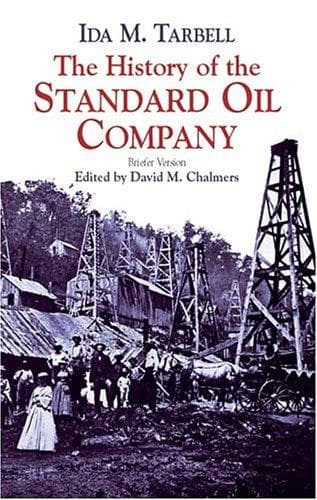
The History of the Standard Oil CompanyTarbell, Ida M. (Ida Minerva)
History
The History of the Standard Oil Company
Tarbell, Ida M. (Ida Minerva)
Petroleum industry and trade -- United States -- History; Standard Oil Company -- History
The first revelation of the public meetings at which the “Pittsburg
Plan” was presented was that in the days Mr. Rockefeller and his friends
had been so diligently shaking hands with the oil men from Titusville to
Oil City they had made converts—that they had not entered these open
meetings until they had secured the assurance of co-operation in any
plan of consolidation which might be effected from some of the ablest
refiners and business men of the creek, notably from J. J. Vandergrift
of Oil City, and from certain firms of Titusville with which John D.
Archbold was connected. All of these persons had fought the South
Improvement Company, and they all now declared that if the proposed
organisation copied that piratical scheme they would have nothing to do
with it, that their allegiance to the plan was based on their conviction
that it was fair to all—who went in!—and that it was made necessary by
over-refining, underselling, and by the certainty that the railroads
could not be trusted to keep their contracts. It was evident that the
possible profits and power to be gained by a successful combination had
wiped out their resentment against the leaders of the South Improvement
Company, and that if they had the assurance, as they must have had, that
rebates were a part of the game, they justified themselves by the
reflection that somebody was sure to get them, and that it might as well
be they as anybody.
The knowledge that a considerable body of the creek refiners had gone
over to Mr. Rockefeller awakened a general bitterness among those who
remained independent. “Deserters,” “ringsters,” “monopolists,” were the
terms applied to them, and the temper of the public meetings, as is
evident from the full reports the newspapers of the Oil Region
published, became at once uncertain. There were long pauses in the
proceedings, everybody fearing to speak. Mr. Rockefeller is not reported
as having spoken at all, the brunt of defense and explanation having
fallen on Mr. Flagler, Mr. Frew and Mr. Waring. Two or three times the
convention wrangled to the point of explosion, and one important
refiner, M. N. Allen, who was also the editor of the Titusville Courier,
one of the best papers in the region, took his hat and left. Before the
end of the convention the supporters of combination ought to have felt,
if they did not, that they had been a little too eager in pressing an
alliance on the Oil Regions so soon after outraging its moral sentiment.
Public-domain text, read in full here on John Shaqi.
Reviews
Reviews
No reviews yet
Be the first to share your thoughts on this work.
Elsewhere in the archive
Join the Discussion
Join the discussion
Sign in to leave a comment or review.
Sign InorCreate an account