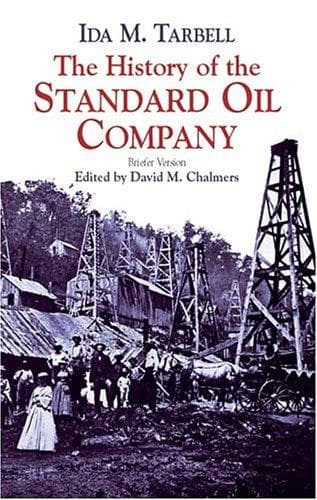
The History of the Standard Oil CompanyTarbell, Ida M. (Ida Minerva)
History
The History of the Standard Oil Company
Tarbell, Ida M. (Ida Minerva)
Petroleum industry and trade -- United States -- History; Standard Oil Company -- History
understand in 1872 was economy. As a matter of fact the oil-producing
business was going through a stage in its natural development similar to
oil refining. Both, under the stimulus of the enormous profits in the
years immediately following the discovery of oil, had been pushed until
they had outstripped consumption. The competition resulting from the
inrush of producers and refiners and the economies which had been worked
out were bringing down profits. The combinations attempted by both
refiners and producers in these years were really efforts to keep up
prices to the extravagant point of the early speculative years.
Now the drop in the price of oil everybody recognised to be due to a
natural cause. Where a year before the production had been 12,000
barrels a day, it was now 16,000. The demand for refined had not
increased in proportion to this production of crude, and oil stocks had
accumulated until the tanks of the region were threatening to overflow.
And there was no sign of falling off. Under these circumstances it
needed little argument to convince the oil men that if they were to get
a better price they must produce no more than the world would use. There
was but one way to effect this—to put down no new wells until the stocks
on hand were reduced and the daily production was brought down to a
marketable amount.
Under the direction of the Producers’ Association an agitation at once
began in favour of stopping the drill for six months. It was a drastic
measure. There was hardly an oil operator in the entire region who had
not on hand some piece of territory on which he was planning to drill,
or on which he had not wells under way. Stopping the drill meant that
all of the aggressive work of his business should cease for six months.
It meant that his production, unreplenished, would gradually fall off,
until at the end of the period he would have probably not over half of
what he had now; that then he must begin over again to build up. It
meant, too, that he was at the mercy of neighbours who might refuse to
join the movement, and who by continuing to drill would drain his
territory. It seemed to him the only way of obtaining a manageable
output of crude, however, and accordingly, when late in the month of
August the following pledge to stop the drill was circulated, the great
majority of the producers signed it:
Public-domain text, read in full here on John Shaqi.
Reviews
Reviews
No reviews yet
Be the first to share your thoughts on this work.
Elsewhere in the archive
Join the Discussion
Join the discussion
Sign in to leave a comment or review.
Sign InorCreate an account