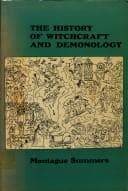
The history of witchcraft and demonologySummers, Montague
History
The history of witchcraft and demonology
Summers, Montague
Demonology; Demonology -- History; Witchcraft; Witchcraft -- History
it until the present day.
The Exorcist is ordained by the Bishop for this office, ordination to
which is the second of the four minor orders of the Western Church. Pope
Cornelius (251-252) mentions in his letter to Fabius that there were then
in the Roman Church forty-two acolytes, and fifty-two exorcists, readers,
and door-keepers, and the institution of these orders together with the
organization of their functions, seems to have been the work of the
predecessor of Cornelius, Pope Saint Fabian the Martyr (236-251).
The rite of the Ordination of Exorcists, “De Ordinatione Exorcistarum,”
is as follows: First, the Book of Exorcisms, or in its place the
Pontifical or Missal must be ready at hand; _Pro Exorcistis ordinandis
paretur liber exorcismorum, cuius loco dari potest Pontificale uel
Missale_ (A Book of Exorcisms must be prepared for those who are to
be ordained Exorcists. Howbeit in place thereof the Pontifical or the
Missal may be handed to them) runs the rubric. When the Lectors have been
ordained, the Bishop resuming his mitre takes his place upon his seat or
faldstool at the Epistle side of the altar, and the Missal with the bugia
being brought by his acolytes he proceeds to read the Gradual, or (if it
be within the Octave of Pentecost) the _Alleluia_. Meantime the Gradual
is sung by the choir. When it is finished, he rises, takes off his mitre,
and turning to the altar intones the third collect. He next sits again,
resumes his mitre, and the third Lection is read. Two chaplains assist
him with bugia and book whence he reads the Lection. The Archdeacon now
summons the ordinandi, who approach, holding lighted tapers in their
hands, and kneel before the Bishop, who solemnly admonishes them with the
prayer:
Public-domain text, read in full here on John Shaqi.
Reviews
Reviews
No reviews yet
Be the first to share your thoughts on this work.
Elsewhere in the archive
Join the Discussion
Join the discussion
Sign in to leave a comment or review.
Sign InorCreate an account