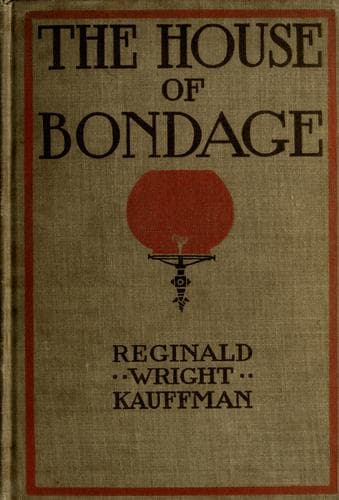
New York (N.Y.) -- Fiction; Prostitutes -- Fiction
She could not do it. With nothing but suffering and horrors to live
for, she could not put an end to life. She was afraid of the cold;
she was afraid of the struggle; she was afraid of the pang; she was
afraid of Death. It was a new thing--Death; she had been afraid of
it ever since that morning of her awakening when the thought of
seeking it had first occurred to her. Since her first crossing of
this water, her experiences had been a procession of new things, each
more terrible than the last; she had come to dread the new, and this
novelty of death she dreaded lest it should be the most terrible of
all. Life, which had robbed her of everything else, had, at this
last, robbed her of the courage to quit it.
Youth, hope, purity, strength, beauty, the ability to work, even lust
and hate--all these were dead within her, dead beyond possibility of
resurrection. If Max had only given her a child! If he, or anyone
of the others, had only killed her! But they had murdered Love, and
the only thing that lived in her was the fear of death.
Out of the bitterness of her own heart, out of the abysses of her own
knowledge of things as they are, she saw much of the truth. A rare
good fortune had favored Katie Flanagan; but Mary, her parents, Rose
and her girls, Carrie, Policeman Riley and Magistrate Dyker, even
Angel and Max--not one of them, well regarded, could be unequivocally
condemned. They were all, preying or preyed upon, an inevitable
result. They were but the types of millions everywhere. New York
itself, with all its women-slaves and men-slaves, must be but an
illustration of what the other cities of the world are and have been.
No rescue of a slave could put an end to the slavery. Something was
wrong; but what that something was, or how it was ever to be made
right, she could not guess. She knew only that, down the years,
wherever walked the great god Poverty, that great god led
Prostitution by the hand.
Finally comprehending, if unable to formulate, these things, at ten
o'clock that night Mary Denbigh, remembering what Philip Beekman had
told her, rang the doorbell of a familiar house and faced what she
would once have feared more than death--she faced complacent,
untroubled, prosperous, and protected Rose Légère.
The woman, still the good-natured woman of the brewery-calendar, cut
short Mary's flow of apologies.
"Ferget it," she said. "It don't matter what you did. You didn't
know any better. Here: just take this ten dollars and tell me what
else I can do for you."
And Mary pushed the money away.
"I don't want that," she said. "I want--oh, Miss Rose, won't you
please take me back?"
But Rose, surveying the human ruin before her, shook, very
positively, her masses of yellow hair.
"No," she answered, "I'm sorry, but I can't do that. It wouldn't be
good business. You see, the life's got you, Violet: you're all in."
_EDITOR'S NOTE_
Public-domain text, read in full here on John Shaqi.
Reviews
Reviews
No reviews yet
Be the first to share your thoughts on this work.
Elsewhere in the archive
Join the Discussion
Join the discussion
Sign in to leave a comment or review.
Sign InorCreate an account