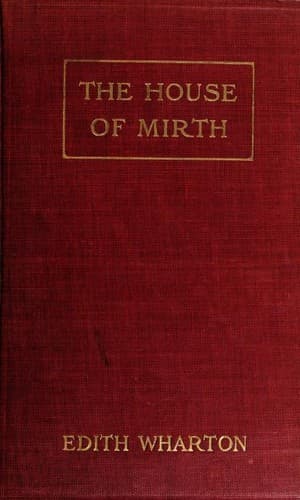
New York (N.Y.) -- Fiction; Psychological fiction; Single women -- Fiction; Social classes -- Fiction
“It is only because I am tired and have such odious things to think
about,” she kept repeating; and it seemed an added injustice that
petty cares should leave a trace on the beauty which was her only
defence against them.
But the odious things were there, and remained with her. She
returned wearily to the thought of Percy Gryce, as a wayfarer picks
up a heavy load and toils on after a brief rest. She was almost
sure she had “landed” him: a few days’ work and she would win her
reward. But the reward itself seemed unpalatable just then: she
could get no zest from the thought of victory. It would be a rest
from worry, no more—and how little that would have seemed to her
a few years earlier! Her ambitions had shrunk gradually in the
desiccating air of failure. But why had she failed? Was it her own
fault or that of destiny?
She remembered how her mother, after they had lost their money, used
to say to her with a kind of fierce vindictiveness: “But you’ll get
it all back—you’ll get it all back, with your face.”... The
remembrance roused a whole train of association, and she lay in the
darkness reconstructing the past out of which her present had grown.
A house in which no one ever dined at home unless there was
“company”; a door-bell perpetually ringing; a hall-table showered
with square envelopes which were opened in haste, and oblong
envelopes which were allowed to gather dust in the depths of a
bronze jar; a series of French and English maids giving warning
amid a chaos of hurriedly-ransacked wardrobes and dress-closets;
an equally changing dynasty of nurses and footmen; quarrels in the
pantry, the kitchen and the drawing-room; precipitate trips to
Europe, and returns with gorged trunks and days of interminable
unpacking; semi-annual discussions as to where the summer should
be spent, grey interludes of economy and brilliant reactions of
expense—such was the setting of Lily Bart’s first memories.
Ruling the turbulent element called home was the vigorous and
determined figure of a mother still young enough to dance her
ball-dresses to rags, while the hazy outline of a neutral-tinted
father filled an intermediate space between the butler and the man
who came to wind the clocks. Even to the eyes of infancy, Mrs.
Hudson Bart had appeared young; but Lily could not recall the time
when her father had not been bald and slightly stooping, with
streaks of grey in his hair, and a tired walk. It was a shock to
her to learn afterward that he was but two years older than her
mother.
Public-domain text, read in full here on John Shaqi.
Reviews
Reviews
No reviews yet
Be the first to share your thoughts on this work.
Join the Discussion
Join the discussion
Sign in to leave a comment or review.
Sign InorCreate an account