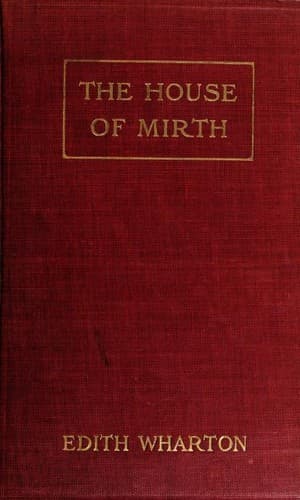
New York (N.Y.) -- Fiction; Psychological fiction; Single women -- Fiction; Social classes -- Fiction
Her ambitions were not as crude as Mrs. Bart’s. It had been among
that lady’s grievances that her husband—in the early days, before
he was too tired—had wasted his evenings in what she vaguely
described as “reading poetry”; and among the effects packed off to
auction after his death were a score or two of dingy volumes which
had struggled for existence among the boots and medicine bottles of
his dressing-room shelves. There was in Lily a vein of sentiment,
perhaps transmitted from this source, which gave an idealizing
touch to her most prosaic purposes. She liked to think of her
beauty as a power for good, as giving her the opportunity to attain
a position where she should make her influence felt in the vague
diffusion of refinement and good taste. She was fond of pictures
and flowers, and of sentimental fiction, and she could not help
thinking that the possession of such tastes ennobled her desire for
worldly advantages. She would not indeed have cared to marry a man
who was merely rich: she was secretly ashamed of her mother’s crude
passion for money. Lily’s preference would have been for an English
nobleman with political ambitions and vast estates; or, for second
choice, an Italian prince with a castle in the Apennines and an
hereditary office in the Vatican. Lost causes had a romantic charm
for her, and she liked to picture herself as standing aloof from
the vulgar press of the Quirinal, and sacrificing her pleasure to
the claims of an immemorial tradition....
How long ago and how far off it all seemed! Those ambitions were
hardly more futile and childish than the earlier ones which had
centred about the possession of a French jointed doll with real
hair. Was it only ten years since she had wavered in imagination
between the English earl and the Italian prince? Relentlessly her
mind travelled on over the dreary interval....
After two years of hungry roaming Mrs. Bart had died——died of a
deep disgust. She had hated dinginess, and it was her fate to be
dingy. Her visions of a brilliant marriage for Lily had faded after
the first year.
“People can’t marry you if they don’t see you—and how can they see
you in these holes where we’re stuck?” That was the burden of her
lament; and her last adjuration to her daughter was to escape from
dinginess if she could.
“Don’t let it creep up on you and drag you down. Fight your way out
of it somehow—you’re young and can do it,” she insisted.
She had died during one of their brief visits to New York, and
there Lily at once became the centre of a family council composed
of the wealthy relatives whom she had been taught to despise
for living like pigs. It may be that they had an inkling of the
sentiments in which she had been brought up, for none of them
manifested a very lively desire for her company; indeed, the
question threatened to remain unsolved till Mrs. Peniston with a
sigh announced: “I’ll try her for a year.”
Public-domain text, read in full here on John Shaqi.
Reviews
Reviews
No reviews yet
Be the first to share your thoughts on this work.
Join the Discussion
Join the discussion
Sign in to leave a comment or review.
Sign InorCreate an account