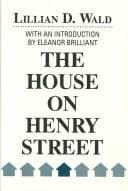
Henry Street Settlement (New York, N.Y.); Poor -- New York (State) -- New York
There was much illness, unemployment, and consequent suffering the
next winter. One day, when I visited a school in the neighborhood, the
principal asked the pupils if they knew me. She doubtless anticipated
some reference to the material services which the settlement had
rendered, but the answer to her question was a glad chorus of, “Yes,
ma’am, yes, ma’am, she’s our scupping teacher.” “Teacher” was a generic
term for the residents, and nothing that the settlement had contributed
to the life of the neighborhood impressed the children as had the
playground. It is worth reminding those who are associated with young
people that the power to influence is given to those who play with,
rather than to those who only teach, them. Our children on the East Side
are not peculiar in this respect. To this day I receive letters from men
and women who try to recall themselves to my memory by saying that they
once played in our back yard.
[Illustration]
An organized propaganda for outdoor gymnasia and playgrounds crystallized
in 1898 in the formation of the Outdoor Recreation League, in which the
settlement participated. The tireless president of the League eventually
succeeded in obtaining the use of a large space in our neighborhood,
originally purchased by the city, during a brief reform administration,
for a park. Some very undesirable tenement houses had been destroyed,
and when a Tammany administration returned to power a hot summer was
allowed to pass with nothing done to accomplish the original purpose.
Unsightly holes, once cellars, remained to fill with stagnant water,
amputated sewer- and gas-pipes were exposed, and among these the children
played mimic battles of the Spanish-American War, then in progress.
The accident that the Commissioner of Health, a semi-invalid, felt
gratitude to a trained nurse who had cared for him, gave me an
opportunity to approach him on the subject. He promised (and he kept his
promise) to use his influence to get an appropriation on the score of
the menace to the health of the city. The appropriation was sufficient
to fill in the space and surround it with a fence, and the Outdoor
Recreation League was able to demonstrate the value of playgrounds.
In 1902 the Board of Estimate and Apportionment of Mayor Seth Low’s
reform administration, at its first meeting, appropriated money for the
equipment and maintenance of Seward Park, as it was named,—the first
municipal playground in New York City. So much interest had been aroused
in this phase of city government that two city officials left the board
meeting while it was in progress to telephone to the settlement that the
appropriation had been passed.
Public-domain text, read in full here on John Shaqi.
Reviews
Reviews
No reviews yet
Be the first to share your thoughts on this work.
Join the Discussion
Join the discussion
Sign in to leave a comment or review.
Sign InorCreate an account