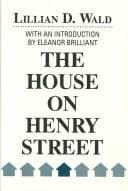
Henry Street Settlement (New York, N.Y.); Poor -- New York (State) -- New York
I had little more than an inspiration to be of use in some way or
somehow, and going to the hospital seemed the readiest means of realizing
my desire. While there, the long hours “on duty” and the exhausting
demands of the ward work scarcely admitted freedom for keeping informed
as to what was happening in the world outside. The nurses had no time
for general reading; visits to and from friends were brief; we were
out of the current and saw little of life save as it flowed into the
hospital wards. It is not strange, therefore, that I should have been
ignorant of the various movements which reflected the awakening of the
social conscience at the time, or of the birth of the “settlement,” which
twenty-five years ago was giving form to a social protest in England and
America. Indeed, it was not until the plan of our work on the East Side
was well developed that knowledge came to me of other groups of people
who, reacting to a humane or an academic appeal, were adopting this mode
of expression and calling it a “settlement.”
Two decades ago the words “East Side” called up a vague and alarming
picture of something strange and alien: a vast crowded area, a foreign
city within our own, for whose conditions we had no concern. Aside from
its exploiters, political and economic, few people had any definite
knowledge of it, and its literary “discovery” had but just begun.
The lower East Side then reflected the popular indifference—it almost
seemed contempt—for the living conditions of a huge population. And the
possibility of improvement seemed, when my inexperience was startled
into thought, the more remote because of the dumb acceptance of these
conditions by the East Side itself. Like the rest of the world I had
known little of it, when friends of a philanthropic institution asked me
to do something for that quarter.
[Illustration]
Remembering the families who came to visit patients in the wards, I
outlined a course of instruction in home nursing adapted to their needs,
and gave it in an old building in Henry Street, then used as a technical
school and now part of the settlement. Henry Street then as now was the
center of a dense industrial population.
From the schoolroom where I had been giving a lesson in bed-making, a
little girl led me one drizzling March morning. She had told me of her
sick mother, and gathering from her incoherent account that a child had
been born, I caught up the paraphernalia of the bed-making lesson and
carried it with me.
[Illustration]
Public-domain text, read in full here on John Shaqi.
Reviews
Reviews
No reviews yet
Be the first to share your thoughts on this work.
Join the Discussion
Join the discussion
Sign in to leave a comment or review.
Sign InorCreate an account