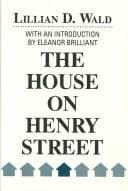
Henry Street Settlement (New York, N.Y.); Poor -- New York (State) -- New York
That morning’s experience was a baptism of fire. Deserted were the
laboratory and the academic work of the college. I never returned to
them. On my way from the sickroom to my comfortable student quarters
my mind was intent on my own responsibility. To my inexperience it
seemed certain that conditions such as these were allowed because people
did not _know_, and for me there was a challenge to know and to tell.
When early morning found me still awake, my naïve conviction remained
that, if people knew things,—and “things” meant everything implied in
the condition of this family,—such horrors would cease to exist, and I
rejoiced that I had had a training in the care of the sick that in itself
would give me an organic relationship to the neighborhood in which this
awakening had come.
* * * * *
To the first sympathetic friend to whom I poured forth my story, I
found myself presenting a plan which had been developing almost without
conscious mental direction on my part. It was doubtless the accumulation
of many reflections inspired by acquaintance with the patients in the
hospital wards, and now, with the Ludlow Street experience, resistlessly
impelling me to action.
Within a day or two a comrade from the training-school, Mary Brewster,
agreed to share in the venture. We were to live in the neighborhood as
nurses, identify ourselves with it socially, and, in brief, contribute to
it our citizenship. That plan contained in embryo all the extended and
diversified social interests of our settlement group to-day.
[Illustration]
We set to work immediately to find quarters—no easy task, as we clung to
the civilization of a bathroom, and according to a legend current at the
time there were only two bathrooms in tenement houses below Fourteenth
Street. Chance helped us here. A young woman who for years played an
important part in the life of many East Side people, overhearing a
conversation of mine with a fellow-student, gave me an introduction to
two men who, she said, knew all about the quarter of the city which I
wished to enter. I called on them immediately, and their response to
my need was as prompt. Without stopping to inquire into my antecedents
or motives, or to discourse on the social aspects of the community, of
which, I soon learned, they were competent to speak with authority,
they set out with me at once, in a pouring rain, to scour the adjacent
streets for “To Let” signs. One which seemed to me worth investigating
my newly acquired friends discarded with the explanation that it was in
the “red light” district and would not do. Later I was to know much of
the unfortunate women who inhabited the quarter, but at the time the term
meant nothing to me.
Public-domain text, read in full here on John Shaqi.
Reviews
Reviews
No reviews yet
Be the first to share your thoughts on this work.
Join the Discussion
Join the discussion
Sign in to leave a comment or review.
Sign InorCreate an account