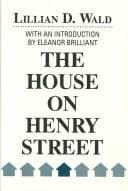
Henry Street Settlement (New York, N.Y.); Poor -- New York (State) -- New York
The key to our apartments, usually left with her, was one day forgotten,
and when, upon unlocking the door, we saw a well-known society woman
seated in our little living-room, we were naturally puzzled to know how
she had arrived there. Mrs. McRae explained that she had taken her up
the fire-escape!—no slight venture and exertion for the inexperienced.
We suggested that other ways might have been more agreeable and safer.
“Whisht,” said Mrs. McRae, with a smile and a wink, “it’s no harm at all.
She’ll be havin’ lots of talk for her friends on this.”
When her roving husband died at home, the funeral arrangements were given
a last touch by Mrs. McRae, who placed on the casket his tobacco and pipe
and ordered the procession to pass his tenement home twice before driving
to the cemetery, “So he’d not think we were not for forgivin’ him and
hurryin’ him away.”
Her first love went to my comrade, whose beauty and humor and goodness
captured her Celtic heart. During our second year in the tenement
Miss Brewster was taken seriously ill, and one evening we had at last
succeeded in forcing Mrs. McRae to go home and had locked the door.
Unknown to us the dear friend remained on the floor outside all through
the night, trying to catch the sound of life from the loved one.
Bringing up a large family, with no help from the “old man,” and with
stern ideals of conduct and integrity, was not easy. Some of her
children, endowed with her character, gave her solace, but she was too
astute not to estimate each one properly.
When we moved from the tenement to our first house Mrs. McRae and her
family gave up the basement rooms, which were rent free because of her
janitor service, in order to be near us, and she spread her warmth over
the new abode. When, some years later, she was ill and we knew that the
end was near, one close to me in my own family claimed my attention. Torn
between the two affections, I was loath to leave the city while Mrs.
McRae was so ill. She guessed the cause of my perturbed state and advised
me to go. “Darlin’, you ought to go. You go. I promise not to die until
you come back.”
Letters kept up this assurance and the promise was fulfilled.
* * * * *
Times were hard that year. In the summer the miseries due to unemployment
and rising rents and prices began to be apparent, but the pinch came
with the cold weather. Perhaps it was an advantage that we were so early
exposed to the extraordinary sufferings and the variety of pain and
poverty in that winter of 1893-94, memorable because of extreme economic
depression. The impact of strain, physical and emotional, left neither
place nor time for self-analysis and consequent self-consciousness, so
prone to hinder and to dwarf wholesome instincts, and so likely to have
proved an impediment to the simple relationship which we established with
our neighbors.
Public-domain text, read in full here on John Shaqi.
Reviews
Reviews
No reviews yet
Be the first to share your thoughts on this work.
Join the Discussion
Join the discussion
Sign in to leave a comment or review.
Sign InorCreate an account