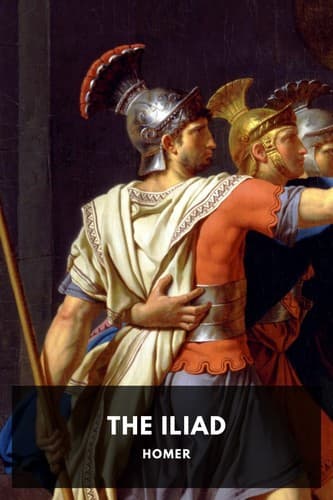
Achilles (Mythological character); Epic poetry, Greek -- Translations into English; Trojan War
“Sleepest thou, son of the warrior, horse-taming Atreus? It becomes not
a counsel-giving man, to whom the people have been intrusted, and to
whom so many things are a care, to sleep all the night. But now quickly
attend to me; for I am a messenger to thee from Jove, who, although far
distant, greatly regards and pities thee. He orders thee to arm the
long-haired Greeks with all their array, for now mayest thou take the
wide-wayed city of the Trojans, since the immortals, who possess the
Olympian mansions, no longer think dividedly; for Juno, supplicating,
hath bent all [to her will], and woes from Jove are impending over the
Trojans. But do thou preserve this in thy recollection, nor let
forgetfulness possess thee, when sweet sleep shall desert thee.”
Thus then having spoken, he departed, and left him there pondering
these things in his mind, which were not destined to be accomplished.
For he, foolish, thought that he would take the city of Priam on that
day; nor knew he the deeds which Jupiter was really devising; for even
he was about yet to impose additional hardships and sorrows upon both
Trojans and Greeks, through mighty conflicts. But he awoke from his
sleep, and the heavenly voice was diffused around him. He sat up erect,
and put on his soft tunic, beautiful, new; and around him he threw his
large cloak. And he bound his beautiful sandals on his shining feet,
and slung from his shoulders the silver-studded sword. He also took his
paternal sceptre, ever imperishable, with which he went to the ships of
the brazen-mailed Greeks.
The goddess Aurora now 76 ascended wide Olympus, announcing the dawn to
Jove and the other immortals. But he 77 on his part ordered the
clear-voiced heralds to summon the long-haired Achæans 78 to an
assembly. They therefore summoned them, and the people were very
speedily assembled. First the assembly of magnanimous elders sat at the
ship of Nestor, the Pylus-born king. Having called them together, he
propounded a prudent counsel:
Footnote 76: (return) ῥα appears to mark the regular transition from
one event to another.
Footnote 77: (return) Agamemnon.
Footnote 78: (return) See on ver. 11.
Public-domain text, read in full here on John Shaqi.
Reviews
Reviews
No reviews yet
Be the first to share your thoughts on this work.
Join the Discussion
Join the discussion
Sign in to leave a comment or review.
Sign InorCreate an account