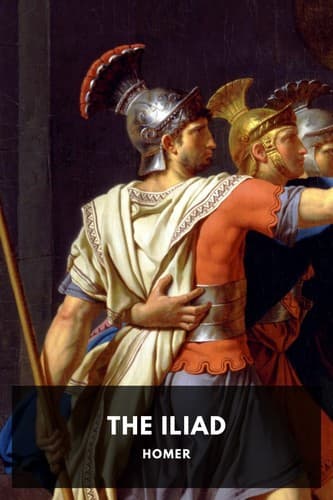
Achilles (Mythological character); Epic poetry, Greek -- Translations into English; Trojan War
whilst to us two it [may be granted] to avoid destruction, that we
alone might overthrow the sacred bulwarks of Troy.”
Footnote 512: (return) _I.e._ “Let bygones be bygones.”—Dublin Ed.
Thus they indeed discussed these matters with each other. But Ajax no
longer remained firm, 513 for he was pressed hard with weapons; because
the counsel of Jove overpowered him, and the fierce Trojans hurling.
And a dreadful clang did his glittering helmet round his temples emit,
being struck, and he was constantly smitten upon the well-made studs of
his casque. He was fatigued in the left shoulder, by always firmly
holding his moveable shield; nor could they, pressing him all around
with their weapons, drive him [from his place]. Unceasingly afflicted
was he with severe panting, and everywhere from his limbs poured
copious perspiration, nor was he able to respire; for everywhere evil
was heaped upon evil.
Footnote 513: (return) Compare the splendid description in Ennius apud
Macrob. Sat. vi. 3:—
Undique conveniunt, vel imber, tela Tribuno.
Configunt parmam, tinnit hastilibus umbo,
Æratæ sonitant galeæ: sed nec pote quisquam
Undique nitendo corpus discerpere ferro.
Semper abundanteis hastas frangitque, quatitque,
Totum sudor habet corpus, multumque laborat:
Nec respirandi fit copia præpete ferro.
Cf. Virg. Æn. ix. 806, sqq.; Stat. Theb. ii. 668, sqq.
Declare now to me, ye Muses, possessing Olympic habitations, how first
the fire fell upon the ships of the Greeks!
Hector, standing near, struck the ashen spear of Ajax with his great
sword, at the socket of the blade behind, and cut it quite off;
Telamonian Ajax indeed vainly brandished the mutilated spear in his
hand; but the brazen blade rang, falling upon the earth at a distance
from him. Then Ajax knew in his blameless soul, and shuddered at the
deeds of the gods; because the lofty thundering Jove cut off his plans
of war, and willed the victory to the Trojans. Wherefore he retired out
of the reach of the weapons, and they hurled the indefatigable fire at
the swift ships, the inextinguishable flame of which was immediately
diffused around. Thus indeed the flame surrounded the stern; but
Achilles, smiting his thighs, addressed Patroclus:
“Haste, O most noble steed-directing Patroclus (I perceive, indeed, the
fury of the hostile fire at the ships), lest they now take the vessels,
and there be not an opportunity of flying; put on thy armour very
quickly, and I shall assemble the forces.”
Public-domain text, read in full here on John Shaqi.
Reviews
Reviews
No reviews yet
Be the first to share your thoughts on this work.
Elsewhere in the archive
Join the Discussion
Join the discussion
Sign in to leave a comment or review.
Sign InorCreate an account