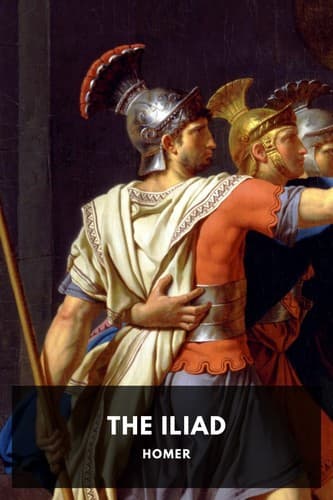
Achilles (Mythological character); Epic poetry, Greek -- Translations into English; Trojan War
“Thersites, reckless babbler! noisy declaimer though thou be, refrain,
nor be forward singly to strive with princes; for I affirm that there
is not another mortal more base than thou, as many as came with the son
of Atreus to Ilium. Wherefore do not harangue, having kings in thy
mouth, nor cast reproaches against them, nor be on the watch for a
return. Not as yet indeed do we certainly know how these matters will
turn out, whether we sons of the Greeks shall return to our advantage
or disadvantage. Wherefore, now thou sittest reviling Agamemnon, son of
Atreus, the leader of the people, because the Grecian heroes give him
very many gifts, whilst thou, insulting, dost harangue. But I declare
to thee, which shall also be accomplished: if ever again I catch thee
raving, as now thou art, no longer may the head of Ulysses rest upon
his shoulders, and no longer may I be called the father of Telemachus,
unless I seizing thee divest thee of thy very garments, thy coat, thy
cloak, and those which cover thy loins; and send thyself weeping to the
swift ships, having beaten thee out of the assembly with severe blows.”
Thus he spoke, and smote him with the sceptre upon the back and the
shoulders; but he writhed, and plenteous tears fell from him, and a
bloody weal arose under the sceptre upon his back. But he sat down and
trembled; and grieving, looking foolish, he wiped away the tears. They,
although chagrined, laughed heartily at him, and thus one would say,
looking towards the person next him:
“O strange! surely ten thousand good deeds has Ulysses already
performed, both originating good counsels, and arousing the war. But
now has he done this by far the best deed amongst the Greeks, in that
he has restrained this foul-mouthed reviler from his harangues. Surely
his petulant mind will not again urge him to chide the kings with
scurrilous language.”
Thus spake the multitude; but Ulysses, the sacker of cities, arose,
holding the sceptre, and beside him azure-eyed Minerva, likened unto a
herald, ordered the people to be silent, that at the same time the sons
of the Greeks, both first and last, might hear his speech, and weigh
his counsel. He wisely counselling, addressed them, and said:
Public-domain text, read in full here on John Shaqi.
Reviews
Reviews
No reviews yet
Be the first to share your thoughts on this work.
Join the Discussion
Join the discussion
Sign in to leave a comment or review.
Sign InorCreate an account