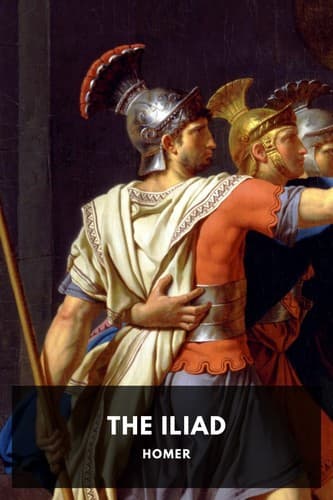
Achilles (Mythological character); Epic poetry, Greek -- Translations into English; Trojan War
While they were stripping from these the shining arms, the young men
who followed with Polydamas and Hector, they that were most in number
and bravest, and most were eager to break the wall and set the ships on
fire, these still stood doubtful by the fosse, for as they were eager
to pass over a bird had appeared to them, an eagle of lofty flight,
skirting the host on the left hand. In its talons it bore a blood-red
monstrous snake, alive, and struggling still; yea, not yet had it
forgotten the joy of battle, but writhed backward and smote the bird
that held it on the breast, beside the neck, and the bird cast it from
him down to the earth, in sore pain, and dropped it in the midst of the
throng; then with a cry sped away down the gusts of the wind. And the
Trojans shuddered when they saw the gleaming snake lying in the midst
of them; an omen of aegis-bearing Zeus.
Then verily Polydamas stood by brave Hector, and spake: “Hector, ever
dost thou rebuke me in the assemblies, though I counsel wisely; since
it by no means beseemeth one of the people to speak contrary to thee,
in council or in war, but always to increase thy power; but now again
will I say all that seemeth to me to be best. Let us not advance and
fight with the Danaans for the ships. For even thus, methinks, the end
will be, if indeed this bird hath come for the Trojans when they were
eager to cross the dyke, this eagle of lofty flight, skirting the host
on the left hand, bearing in his talons a blood-red monstrous snake,
yet living; then straightway left he hold of him, before he reached his
own nest, nor brought him home in the end to give to his nestlings.
Even so shall we, though we burst with mighty force the gates and wall
of the Achaians, and the Achaians give ground, even so we shall return
in disarray from the ships by the way we came; for many of the Trojans
shall we leave behind, whom the Achaians will slay with the sword, in
defence of the ships. Even so would a soothsayer interpret that in his
heart had clear knowledge of omens, and whom the people obeyed.”
Public-domain text, read in full here on John Shaqi.
Reviews
Reviews
No reviews yet
Be the first to share your thoughts on this work.
Elsewhere in the archive
Join the Discussion
Join the discussion
Sign in to leave a comment or review.
Sign InorCreate an account