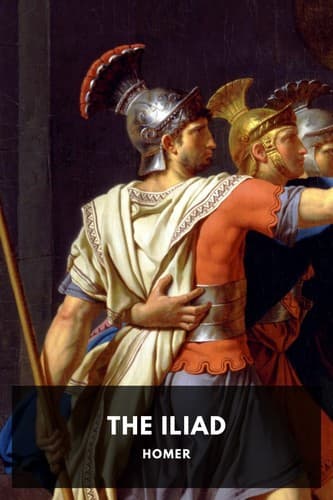
Achilles (Mythological character); Epic poetry, Greek -- Translations into English; Trojan War
Now the kings, the fosterlings of Zeus, encountered Nestor, as they
went up from the ships, even they that were wounded with the bronze,
Tydeus’ son, and Odysseus, and Agamemnon, son of Atreus. For far apart
from the battle were their ships drawn up, on the shore of the grey
sea, for these were the first they had drawn up to the plain, but had
builded the wall in front of the hindmost. For in no wise might the
beach, for as wide as it was, hold all the ships, and the host was
straitened. Wherefore they drew up the ships row within row, and filled
up the wide mouth of all the shore that the headlands held between
them. Therefore the kings were going together, leaning on their spears,
to look on the war and fray, and the heart of each was sore within his
breast. And the old man met them, even Nestor, and caused the spirit to
fail within the breasts of the Achaians.
And mighty Agamemnon spake and accosted him: “O Nestor, son of Neleus,
great glory of the Achaians, wherefore dost thou come hither and hast
deserted the war, the bane of men? Lo, I fear the accomplishment of the
word that dread Hector spake, and the threat wherewith he threatened
us, speaking in the assembly of the Trojans, namely, that never would
he return to Ilios from the ships, till he had burned the ships with
fire, and slain the men. Even so he spake, and, lo, now all these
things are being fulfilled. Alas, surely even the other well-greaved
Achaians store wrath against me in their hearts, like Achilles, and
have no desire to fight by the rearmost ships.”
Then Nestor of Gerenia the knight answered him saying “Verily these
things are now at hand, and being accomplished, nor otherwise could
Zeus himself contrive them, he that thundereth on high. For, lo, the
wall is overthrown, wherein we trusted that it should be an unbroken
bulwark of the ships and of our own bodies. And these men by the swift
ships have endless battle without sparing, and no more couldst thou
tell, howsoever closely thou mightst spy, from what side the Achaians
are driven in rout, so confusedly are they slain, and the cry of battle
goeth up to heaven. But let us take counsel, how these things may best
be done, if wit may do aught: but into the war I counsel not that we
should go down, for in no wise may a wounded man do battle.”
Public-domain text, read in full here on John Shaqi.
Reviews
Reviews
No reviews yet
Be the first to share your thoughts on this work.
Elsewhere in the archive
Join the Discussion
Join the discussion
Sign in to leave a comment or review.
Sign InorCreate an account