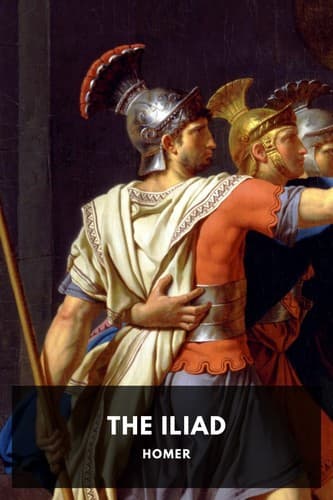
Achilles (Mythological character); Epic poetry, Greek -- Translations into English; Trojan War
spake winged words: “Patroklos, surely thou saidst that thou wouldst
sack my town, and from Trojan women take away the day of freedom, and
bring them in ships to thine own dear country: fool! nay, in front of
these were the swift horses of Hector straining their speed for the
fight; and myself in wielding the spear excel among the war-loving
Trojans, even I who ward from them the day of destiny: but thee shall
vultures here devour. Ah, wretch, surely Achilles for all his valour,
availed thee not, who straitly charged thee as thou camest, he abiding
there, saying, ‘Come not to me, Patroklos lord of steeds, to the hollow
ships, till thou hast torn the gory doublet of man-slaying Hector about
his breast;’ so, surely, he spake to thee, and persuaded the wits of
thee in thy witlessness.”
Then faintly didst thou answer him, knightly Patroklos: “Boast greatly,
as now, Hector, for to thee have Zeus, son of Kronos, and Apollo given
the victory, who lightly have subdued me; for themselves stripped my
harness from my shoulders. But if twenty such as thou had encountered
me, here had they all perished, subdued beneath my spear. But me have
ruinous Fate and the son of Leto slain, and of men Euphorbos, but thou
art the third in my slaying. But another thing will I tell thee, and do
thou lay it up in thy heart: verily thou thyself art not long to live,
but already doth Death stand hard by thee, and strong Fate, that thou
art to be subdued by the hands of noble Achilles, of the seed of
Aiakos.”
Even as so he spake the end of death overshadowed him. And his soul,
fleeting from his limbs, went down to the house of Hades, wailing its
own doom, leaving manhood and youth.
Then renowned Hector spake to him even in his death: “Patroklos,
wherefore to me dolt thou prophesy sheer destruction? who knows but
that Achilles, the child of fair-tressed Thetis, will first be smitten
by my spear, and lose his life?”
So spake he, and drew the spear of bronze from the wound, setting his
foot on the dead, and cast him off on his back from the spear. And
straightway with the spear he went after Automedon, the godlike squire
of the swift-footed Aiakides, for he was eager to smite him; but his
swift-footed immortal horses bare him out of the battle, horses that
the gods gave to Peleus, a splendid gift.
BOOK XVII.
Of the battle around the body of Patroklos.
Public-domain text, read in full here on John Shaqi.
Reviews
Reviews
No reviews yet
Be the first to share your thoughts on this work.
Elsewhere in the archive
Join the Discussion
Join the discussion
Sign in to leave a comment or review.
Sign InorCreate an account