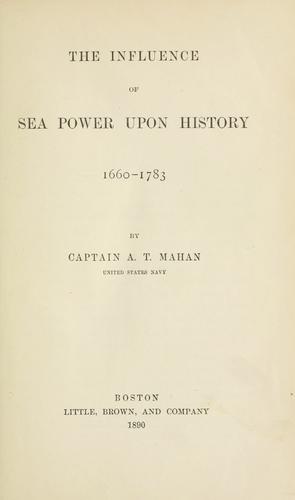
The Influence of Sea Power Upon History, 1660-1783Mahan, A. T. (Alfred Thayer)
History
The Influence of Sea Power Upon History, 1660-1783
Mahan, A. T. (Alfred Thayer)
Naval history, Modern; Sea-power
The naval war differs from those that preceded it in more than one
respect; but its most distinctive feature is that the Dutch, except on
one occasion at the very beginning, did not send out their fleet to
meet the enemy, but made what may properly be called a strategic use
of their dangerous coast and shoals, upon which were based their sea
operations. To this course they were forced by the desperate odds
under which they were fighting; but they did not use their shoals as a
mere shelter,--the warfare they waged was the defensive-offensive.
When the wind was fair for the allies to attack, Ruyter kept under
cover of his islands, or at least on ground where the enemy dared not
follow; but when the wind served so that he might attack in his own
way, he turned and fell upon them. There are also apparent indications
of tactical combinations, on his part, of a higher order than have
yet been met; though it is possible that the particular acts referred
to, consisting in partial attacks amounting to little more than
demonstrations against the French contingent, may have sprung from
political motives. This solution for the undoubted fact that the Dutch
attacked the French lightly has not been met with elsewhere by the
writer; but it seems possible that the rulers of the United Provinces
may have wished not to increase the exasperation of their most
dangerous enemy by humiliating his fleet, and so making it less easy
to his pride to accept their offers. There is, however, an equally
satisfactory military explanation in the supposition that, the French
being yet inexperienced, Ruyter thought it only necessary to contain
them while falling in force upon the English. The latter fought
throughout with their old gallantry, but less than their old
discipline; whereas the attacks of the Dutch were made with a
sustained and unanimous vigor that showed a great military advance.
The action of the French was at times suspicious; it has been alleged
that Louis ordered his admiral to economize his fleet, and there is
good reason to believe that toward the end of the two years that
England remained in his alliance he did do so.
Public-domain text, read in full here on John Shaqi.
Reviews
Reviews
No reviews yet
Be the first to share your thoughts on this work.
Elsewhere in the archive
Join the Discussion
Join the discussion
Sign in to leave a comment or review.
Sign InorCreate an account