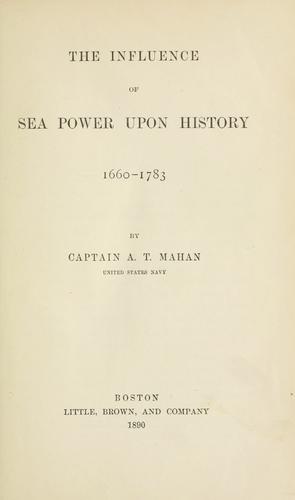
The Influence of Sea Power Upon History, 1660-1783Mahan, A. T. (Alfred Thayer)
History
The Influence of Sea Power Upon History, 1660-1783
Mahan, A. T. (Alfred Thayer)
Naval history, Modern; Sea-power
The United Provinces were in truth the mainspring of the coalition.
Though among the smallest in extent of the countries arrayed against
Louis, they were strongest in the character and purpose of their
ruler, the Prince of Orange, and in the wealth which, while supporting
the armies of the confederates, also kept the poor and greedy German
princes faithful to their alliance. Almost alone, by dint of mighty
sea power, by commercial and maritime ability, they bore the burden of
the war; and though they staggered and complained, they still bore it.
As in later centuries England, so at the time we are now speaking of
Holland, the great sea power, supported the war against the ambition
of France; but her sufferings were great. Her commerce, preyed upon by
French privateers, lost heavily; and there was added an immense
indirect loss in the transfer of the carrying-trade between foreign
countries, which had contributed so much to the prosperity of the
Dutch. When the flag of England became neutral, this rich business
went to her ships, which crossed the seas the more securely because of
the eager desire of Louis to conciliate the English nation. This
desire led him also to make very large concessions to English
exigencies in the matter of commercial treaties, undoing much of the
work of protection upon which Colbert sought to nourish the yet feeble
growth of French sea power. These sops, however, only stayed for a
moment the passions which were driving England; it was not
self-interest, but stronger motives, which impelled her to a break
with France.
Public-domain text, read in full here on John Shaqi.
Reviews
Reviews
No reviews yet
Be the first to share your thoughts on this work.
Elsewhere in the archive
Join the Discussion
Join the discussion
Sign in to leave a comment or review.
Sign InorCreate an account