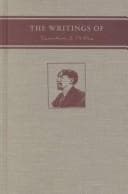
The instinct of workmanship, and the state of industrial artsVeblen, Thorstein
Philosophy
The instinct of workmanship, and the state of industrial arts
Veblen, Thorstein
Industrial arts -- History; Industries -- History; Technology -- History; Workmanship -- History
When presently the machine technology comes forward this habitual
preconception touching the invariability of material quantity finds
new applications and new refinements of application, with the outcome
that its guidance of men’s thinking grows ever more inclusive and more
peremptory. But it is not until half a century after the Industrial
Revolution that the principle may be said finally to have gained
unquestioning acceptance as a theorem universally binding on material
phenomena. By that time--about the second quarter of the nineteenth
century--the unqualified validity of this theorem had become so
unmitigated a matter of course as to have fairly shifted from the
ground of empirical generalisation to that of metaphysical thesis. Men
of science then quite ingenuously set about proving the law of the
Conservation of Energy by appeal to experiments and reasoning that
proceeded with absolute naïveté on the tacit assumption of the theorem
to be proven.
* * * * *
In its bearing on the growth of institutions the machine technology
has yet scarcely had time to make its mark. Such institutional factors
as, e. g., the common law are necessarily of slow growth. A system
of civil rights is not only a balanced scheme of habitual responses
to those stimuli at whose impact they take effect; it is at the same
time a scheme which has the sanction of avowed common consent, such as
will express itself in rating these institutional elements as facts
of immemorial usage or as integrally inherent in the nature of things
from the beginning. Such civil institutions take shape as prescriptive
custom, and matters of habit which so are supported by broad grounds
of authenticity and correlation with other elements of a prescriptive
scheme of things will adapt themselves only tardily to any change in
the situation or to any new bias in the drift of discipline. What
happened in the matter of civil rights under the system of handicraft
is an illustration in point. There need be little question but the
eighteenth century scheme of Natural Rights was an outcome of the
protracted discipline characteristic of the era of handicraft, and an
adaptation to the exigencies of daily life under that system.
Public-domain text, read in full here on John Shaqi.
Reviews
Reviews
No reviews yet
Be the first to share your thoughts on this work.
Elsewhere in the archive
Join the Discussion
Join the discussion
Sign in to leave a comment or review.
Sign InorCreate an account