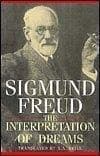
Since the appearance of the author’s _Selected Papers on Hysteria and
other Psychoneuroses_, and _Three Contributions to the Sexual
Theory_,[A] much has been said and written about Freud’s works. Some of
our readers have made an honest endeavour to test and utilise the
author’s theories, but they have been handicapped by their inability to
read fluently very difficult German, for only two of Freud’s works have
hitherto been accessible to English readers. For them this work will be
of invaluable assistance. To be sure, numerous articles on the Freudian
psychology have of late made their appearance in our literature;[B] but
these scattered papers, read by those unacquainted with the original
work, often serve to confuse rather than enlighten. For Freud cannot be
mastered from the reading of a few pamphlets, or even one or two of his
original works. Let me repeat what I have so often said: No one is
really qualified to use or to judge Freud’s psychoanalytic method who
has not thoroughly mastered his theory of the neuroses—_The
Interpretation of Dreams_, _Three Contributions to the Sexual Theory_,
_The Psychopathology of Everyday Life_, and _Wit and its Relation to the
Unconscious_, and who has not had considerable experience in analysing
the dreams and psychopathological actions of himself and others. That
there is required also a thorough training in normal and abnormal
psychology goes without saying.
_The Interpretation of Dreams_ is the author’s greatest and most
important work; it is here that he develops his psychoanalytic
technique, a thorough knowledge of which is absolutely indispensable for
every worker in this field. The difficult task of making a translation
of this work has, therefore, been undertaken primarily for the purpose
of assisting those who are actively engaged in treating patients by
Freud’s psychoanalytic method. Considered apart from its practical aim,
the book presents much that is of interest to the psychologist and the
general reader. For, notwithstanding the fact that dreams have of late
years been the subject of investigation at the hands of many competent
observers, only few have contributed anything tangible towards their
solution; it was Freud who divested the dream of its mystery, and solved
its riddles. He not only showed us that the dream is full of meaning,
but amply demonstrated that it is intimately connected with normal and
abnormal mental life. It is in the treatment of the abnormal mental
states that we must recognise the most important value of dream
interpretation. The dream does not only reveal to us the cryptic
mechanisms of hallucinations, delusions, phobias, obsessions, and other
psychopathological conditions, but it is also the most potent instrument
in the removal of these.[C]
I take this opportunity of expressing my indebtedness to Professor F. C.
Prescott for reading the manuscript and for helping me overcome the
almost insurmountable difficulties in the translation.
Public-domain text, read in full here on John Shaqi.
Reviews
Reviews
No reviews yet
Be the first to share your thoughts on this work.
Join the Discussion
Join the discussion
Sign in to leave a comment or review.
Sign InorCreate an account