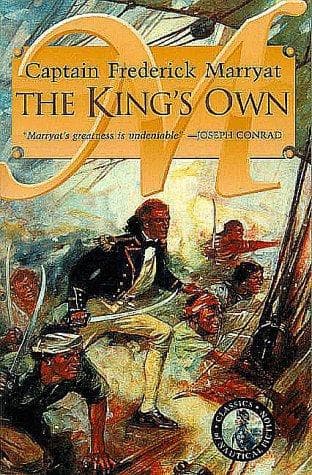
Great Britain -- History, Naval -- 18th century -- Fiction; Nore Mutiny, 1797 -- Fiction
What next?--Oh, salts and burnt feathers; he had read of them in a
novel. Salts he had none--burnt feathers were to be procured. There
were two live birds, called cardinals, belonging to Mrs McElvina, in a
cage near the window, and there was also a stuffed green parrot in a
glass case. Seymour showed his usual presence of mind in his decision.
The tails of the live birds would in all probability grow again; that of
the stuffed parrot never could. He put his hand into the cage, and
seizing the fluttering proprietors, pulled out both their long tails,
and having secured the door of the cage, thrust the ends of the feathers
into the fire, and applied them, frizzing and spluttering, to the
nostrils of Emily. But they were replaced in the fire again and again,
until they would emit no more smoke, and Emily still continued in a
state of insensibility. There was no help for it--the parrot, which he
knew Mrs McElvina was partial to, must be sacrificed. A blow with the
poker demolished the glass, and the animal was wrenched off its perch,
and the tail inserted between the bars of the grate. But burnt feathers
were of no use; and Seymour, when he had burnt down the parrot's tail to
the stump, laid it upon the table in despair.
He now began to be seriously alarmed, and the beauty of the object
heightened his pity and commiseration. His anxiety increased to that
degree that, losing his presence of mind, and giving way to his
feelings, he apostrophised the inanimate form, and, hanging over it with
the tenderness of a mother over her lifeless child, as a last resource,
kissed its lips again and again with almost frantic anxiety. At the
time of his most eager application of this last remedy, McElvina and
Susan entered the room, without his being aware of their approach.
The parrot on the table, with his tail still burning like a slow match,
first caught their eyes: and as they advanced further in, there was
Seymour, to their astonishment, kissing a young lady to whom he had
never been introduced, and who appeared to be quite passive to his
endearments.
"Seymour!" cried McElvina,--"what is all this?"
"I'm glad you've come; I cannot bring her to. I've tried everything."
"So it appears. Why, you've smothered her--she's black in the face,"
replied McElvina, observing the marks of the Indian ink upon Emily's
cheek.
Susan, who immediately perceived the condition of Emily, applied her
salts, and desired McElvina to call the women. In a few minutes,
whether it was that the remedies were more effectual, or nature had
resumed her powers, Emily opened her eyes, and was carried upstairs into
Mrs McElvina's room.
Public-domain text, read in full here on John Shaqi.
Reviews
Reviews
No reviews yet
Be the first to share your thoughts on this work.
Elsewhere in the archive
Join the Discussion
Join the discussion
Sign in to leave a comment or review.
Sign InorCreate an account