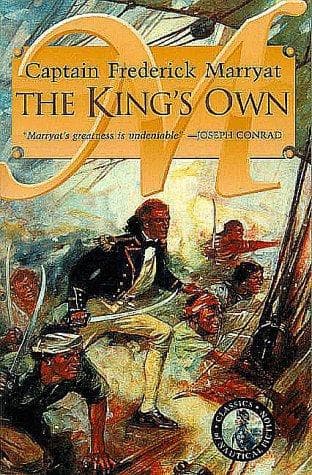
Great Britain -- History, Naval -- 18th century -- Fiction; Nore Mutiny, 1797 -- Fiction
On the hammock-nettings of the quarter-deck stands the acting captain of
the ship, erect, and proud in bearing, with an eye of defiance and scorn
as he turns towards the enemy. His advice was disregarded; but he does
his duty proudly and cheerfully. He is as cool and unconcerned as if he
were watching the flying fish as they rise from the bows of the ship,
when running down the tropics, instead of the enemy's shot, as they
splash in the water alongside, or tear open the timbers of the vessel,
and the bodies of his crew. The men still ply their half-manned guns;
but they are exhausted with fatigue, and the bloody deck proves that
many have been dismissed from their duty. The first-lieutenant is
missing; you will find him in the cock-pit--they have just finished
taking up the arteries of his right arm, which has been amputated; and
the Scotch surgeon's assistant, who for many months bewailed the want of
practice, and who, for having openly expressed his wishes on that
subject, had received a sound thrashing from the exasperated midshipmen,
is now complimenting the fainting man upon the excellent stump that they
have made for him: while fifty others, dying or wounded, with as much
variety as Homer's heroes, whose blood, trickling from them in several
rivulets, pours into one general lake at the lowest level of the deck,
are anxiously waiting their turn, and distract the purser's steward by
their loud calls, in every direction at the same time for the tin-pot of
water, with which he is relieving their agonising thirst.
A large shark is under the counter; he is so gorged with human flesh,
that he can scarcely move his tail in the tinged water; and he now hears
the sullen plunges of the bodies, as they are launched through the
lower-deck port, with perfect indifference. "Oh! what a glorious
thing's a battle!"
But to return to our particular narrative. As we mentioned before, the
citadel threw shells with remarkable precision, and every man who had
been killed on the quarter-deck of the commodore's ship, towards which
the attention of the enemy was particularly directed, had been laid low
by these horrible engines of modern warfare. The action still
continued, although the fire on both sides had evidently slackened, and
the commodore's glass had at several intervals been fruitlessly directed
towards the troops on shore, when accident brought about a change in
favour of our countrymen. Through some unknown cause, the magazine of
the enemy's largest battery exploded, and buried the fabric with its
tenants in one mass of ruin. The enemy were panic-struck with their
misfortune--our troops and sailors inspired with fresh courage--and the
fire was recommenced with three cheers and redoubled vigour. The troops
pushed on, and succeeded in taking possession of the masked battery,
which had so long and so effectually raked the commodore.
Public-domain text, read in full here on John Shaqi.
Reviews
Reviews
No reviews yet
Be the first to share your thoughts on this work.
Join the Discussion
Join the discussion
Sign in to leave a comment or review.
Sign InorCreate an account