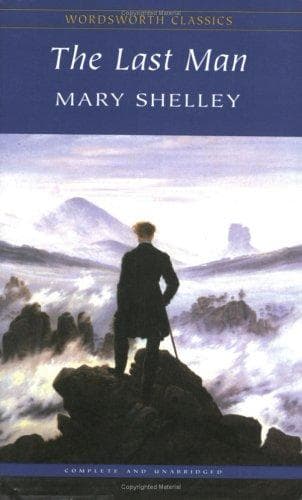
End of the world -- Fiction; Epidemics -- Fiction; Science fiction; Twenty-first century -- Fiction
It was May before they arrived: the season had decked the forest trees
with leaves, and its paths with a thousand flowers. We had notice of
their intention the day before; and, early in the morning, Perdita
arrived with her daughter. Raymond would follow soon, she said; he had
been detained by business. According to Adrian’s account, I had
expected to find her sad; but, on the contrary, she appeared in the
highest spirits: true, she had grown thin, her eyes were somewhat
hollow, and her cheeks sunk, though tinged by a bright glow. She was
delighted to see us; caressed our children, praised their growth and
improvement; Clara also was pleased to meet again her young friend
Alfred; all kinds of childish games were entered into, in which Perdita
joined. She communicated her gaiety to us, and as we amused ourselves
on the Castle Terrace, it appeared that a happier, less care-worn party
could not have been assembled. “This is better, Mamma,” said Clara,
“than being in that dismal London, where you often cry, and never laugh
as you do now.”—“Silence, little foolish thing,” replied her mother,
“and remember any one that mentions London is sent to Coventry for an
hour.”
Soon after, Raymond arrived. He did not join as usual in the playful
spirit of the rest; but, entering into conversation with Adrian and
myself, by degrees we seceded from our companions, and Idris and
Perdita only remained with the children. Raymond talked of his new
buildings; of his plan for an establishment for the better education of
the poor; as usual Adrian and he entered into argument, and the time
slipped away unperceived.
Public-domain text, read in full here on John Shaqi.
Reviews
Reviews
No reviews yet
Be the first to share your thoughts on this work.
Elsewhere in the archive
Join the Discussion
Join the discussion
Sign in to leave a comment or review.
Sign InorCreate an account