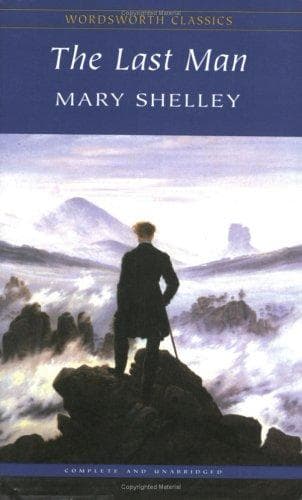
End of the world -- Fiction; Epidemics -- Fiction; Science fiction; Twenty-first century -- Fiction
With summer and mortality grew our fears. My poor love and I looked at
each other, and our babes.—“We will save them, Idris,” I said, “I will
save them. Years hence we shall recount to them our fears, then passed
away with their occasion. Though they only should remain on the earth,
still they shall live, nor shall their cheeks become pale nor their
sweet voices languish.” Our eldest in some degree understood the scenes
passing around, and at times, he with serious looks questioned me
concerning the reason of so vast a desolation. But he was only ten
years old; and the hilarity of youth soon chased unreasonable care from
his brow. Evelyn, a laughing cherub, a gamesome infant, without idea of
pain or sorrow, would, shaking back his light curls from his eyes, make
the halls re-echo with his merriment, and in a thousand artless ways
attract our attention to his play. Clara, our lovely gentle Clara, was
our stay, our solace, our delight. She made it her task to attend the
sick, comfort the sorrowing, assist the aged, and partake the sports
and awaken the gaiety of the young. She flitted through the rooms, like
a good spirit, dispatched from the celestial kingdom, to illumine our
dark hour with alien splendour. Gratitude and praise marked where her
footsteps had been. Yet, when she stood in unassuming simplicity before
us, playing with our children, or with girlish assiduity performing
little kind offices for Idris, one wondered in what fair lineament of
her pure loveliness, in what soft tone of her thrilling voice, so much
of heroism, sagacity and active goodness resided.
The summer passed tediously, for we trusted that winter would at least
check the disease. That it would vanish altogether was an hope too
dear— too heartfelt, to be expressed. When such a thought was
heedlessly uttered, the hearers, with a gush of tears and passionate
sobs, bore witness how deep their fears were, how small their hopes.
For my own part, my exertions for the public good permitted me to
observe more closely than most others, the virulence and extensive
ravages of our sightless enemy. A short month has destroyed a village,
and where in May the first person sickened, in June the paths were
deformed by unburied corpses—the houses tenantless, no smoke arising
from the chimneys; and the housewife’s clock marked only the hour when
death had been triumphant. From such scenes I have sometimes saved a
deserted infant—sometimes led a young and grieving mother from the
lifeless image of her first born, or drawn the sturdy labourer from
childish weeping over his extinct family.
Public-domain text, read in full here on John Shaqi.
Reviews
Reviews
No reviews yet
Be the first to share your thoughts on this work.
Elsewhere in the archive
Join the Discussion
Join the discussion
Sign in to leave a comment or review.
Sign InorCreate an account