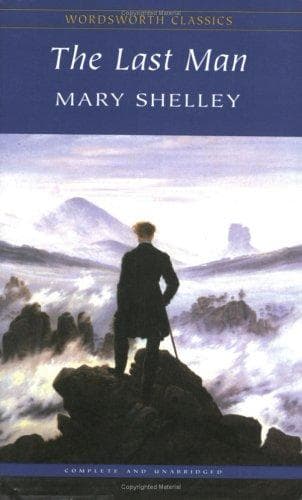
End of the world -- Fiction; Epidemics -- Fiction; Science fiction; Twenty-first century -- Fiction
Well known indeed it was. Each cottage stood on its accustomed site,
each tree wore its familiar appearance. Habit had graven uneraseably on
my memory, every turn and change of object on the road. At a short
distance beyond the Little Park, was an elm half blown down by a storm,
some ten years ago; and still, with leafless snow-laden branches, it
stretched across the pathway, which wound through a meadow, beside a
shallow brook, whose brawling was silenced by frost—that stile, that
white gate, that hollow oak tree, which doubtless once belonged to the
forest, and which now shewed in the moonlight its gaping rent; to whose
fanciful appearance, tricked out by the dusk into a resemblance of the
human form, the children had given the name of Falstaff;—all these
objects were as well known to me as the cold hearth of my deserted
home, and every moss-grown wall and plot of orchard ground, alike as
twin lambs are to each other in a stranger’s eye, yet to my accustomed
gaze bore differences, distinction, and a name. England remained,
though England was dead—it was the ghost of merry England that I
beheld, under those greenwood shade passing generations had sported in
security and ease. To this painful recognition of familiar places, was
added a feeling experienced by all, understood by none—a feeling as if
in some state, less visionary than a dream, in some past real
existence, I had seen all I saw, with precisely the same feelings as I
now beheld them—as if all my sensations were a duplex mirror of a
former revelation. To get rid of this oppressive sense I strove to
imagine change in this tranquil spot—this augmented my mood, by causing
me to bestow more attention on the objects which occasioned me pain.
I reached Datchet and Lucy’s humble abode—once noisy with Saturday
night revellers, or trim and neat on Sunday morning it had borne
testimony to the labours and orderly habits of the housewife. The snow
lay high about the door, as if it had remained unclosed for many days.
“What scene of death hath Roscius now to act?”
Public-domain text, read in full here on John Shaqi.
Reviews
Reviews
No reviews yet
Be the first to share your thoughts on this work.
Elsewhere in the archive
Join the Discussion
Join the discussion
Sign in to leave a comment or review.
Sign InorCreate an account