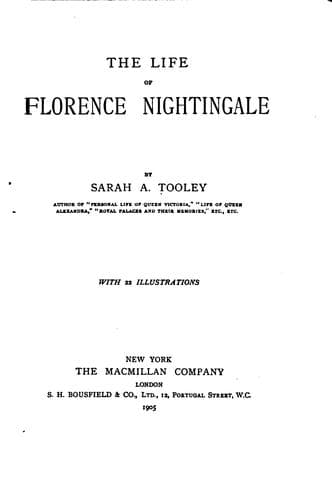
Nightingale, Florence, 1820-1910; Nurses -- England -- Biography
It was the testing moment of her life. Had Florence Nightingale failed
at this crisis in personal endurance, or in power to inspire her
subordinates with a like courage, her mission would have sunk into
a benevolent futility. She and her nurses might have run hither and
thither smoothing pillows, administering gruel, and doing other kind
and womanly service, but grateful as that would be to the poor
fellows in their extreme misery, it would not have remedied the root
of the evil. The Lady-in-Chief had to look beyond the present moment,
though not neglectful of its demands, to the more important future,
and institute a system of nursing reform which should make such scenes
as she now witnessed impossible. It was her ability to do this which
lifted Florence Nightingale into such a supreme position.
The attention and praises bestowed on her during the Crimean period
roused a little jealousy and resentment in some quarters. Other women
engaged in nursing the sick soldiers possibly thought that they had
made equal personal sacrifices with Miss Nightingale--some indeed gave
their life in the cause. Others again, returning to a life of seclusion
after toiling through the arduous nursing of the campaign, might
perhaps have felt some injustice that one name alone rang through the
land, while others who also had borne the heat and burden of the day
remained unhonoured and unsung. No one would wish to exempt from due
praise even the humblest of that “Angel Band” who worked with Florence
Nightingale and still less would she, but in every great cause there is
the initiating genius who stands in solitary grandeur above the rank
and file of followers.
Such was the Lady-in-Chief: she came to Scutari as something far more
even than an efficient nurse. She brought the organising and governing
faculty and the brain power of which the officials in charge seemed
bereft. Delicate, high-bred, and retiring in nature as Miss Nightingale
was, she possessed the subtle quality which gave her command over
others, that undefinable something which broke down the opposition of
the most conservative obstructionist when he came under her personal
influence. She was unfettered by precedent or red tape, and brought to
her task a clear idea of the administrative mechanism which was needed
to afford due care and provision for the prostrate soldiery.
Public-domain text, read in full here on John Shaqi.
Reviews
Reviews
No reviews yet
Be the first to share your thoughts on this work.
Elsewhere in the archive
Join the Discussion
Join the discussion
Sign in to leave a comment or review.
Sign InorCreate an account