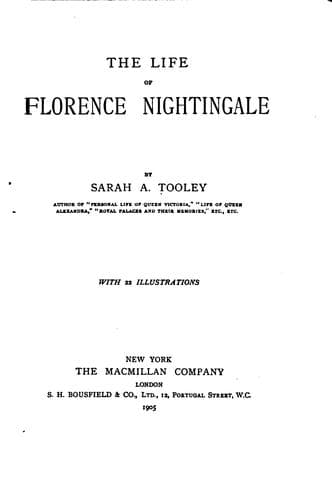
Nightingale, Florence, 1820-1910; Nurses -- England -- Biography
Alas! through mismanagement, these stores had been rotting on the shore
at Varna, instead of reaching Scutari, and much that had arrived was
packed beneath heavy ammunition and difficult to get at. The loss of
the _Prince_, laden with supplies, was a culminating disaster which
occurred on November 14th, about two weeks after Miss Nightingale’s
arrival.
The reticence of the hospital authorities prevented the true state of
affairs from reaching the British public. Indeed, the whole Service,
from commandant to orderly, conspired to say “All right,” when all was
wrong. One of the sisters has described how this policy worked in the
wards. An orderly officer took the rounds of the wards every night, to
see that all was in order. He was of course expected by the orderlies,
and the moment he raised the latch he received the word, “All right,
your honour,” and passed on. This was hospital inspection!
In excuse for the officers who were thus easily put off, it may be said
that the wards were filled with pestilence, and the air so polluted by
cholera and fever patients that it seemed courting death to enter.
For that reason orderlies already on the sick list were set to act
as nurses, and they often drank the brandy which it was their duty
to administer to the patients, in order to keep up their spirits,
or “drown their grief,” as they preferred to put it. Men in this
condition became very callous. Those stricken with cholera had their
sufferings terribly enhanced by the dread of being buried alive, and
used to beseech the orderlies not to send them to the dead-house until
quite sure that they had breathed their last. Utter collapse was the
last stage of Asiatic cholera, and the orderlies took little pains
to ascertain when the exact moment of dissolution came; consequently
numbers of still living men were hurried to the dead-house. One does
not wish to hold up to blame and execration the seeming inhumanity of
the orderlies. They were set to do work for which they were untrained
and often physically unfit, and were also demoralised by the shocking
condition of the wards. It was the system rather than individuals which
was to blame.
Into these insanitary, filthy, and pestilential wards came the
Lady-in-Chief, and she did not say “All right.” It was useless for
officialdom to “pooh-pooh”: she, fortunately, had Government authority.
What her quick eye saw was communicated to the Commander-in-Chief, Lord
Raglan, and to Mr. Sidney Herbert at the War Office, and brought in due
course the needed instructions for reform.
Public-domain text, read in full here on John Shaqi.
Reviews
Reviews
No reviews yet
Be the first to share your thoughts on this work.
Elsewhere in the archive
Join the Discussion
Join the discussion
Sign in to leave a comment or review.
Sign InorCreate an account