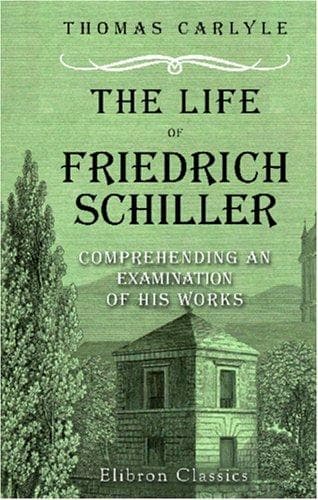
The Life of Friedrich Schiller: Comprehending an Examination of His WorksCarlyle, Thomas
General
The Life of Friedrich Schiller: Comprehending an Examination of His Works
Carlyle, Thomas
Authors, German -- 18th century -- Biography; Schiller, Friedrich, 1759-1805; Schubart, Christian Friedrich Daniel, 1739-1791
By degrees, however, both parties found that they had been mistaken.
The course of accidents brought many things to light, which had been
hidden; the true character of each became unfolded more and more
completely to the other; and the cold, measured tribute of respect was
on both sides animated and exalted by feelings of kindness, and
ultimately of affection. Ere long, Schiller had by gratifying proofs
discovered that 'this Goethe was a very worthy man;' and Goethe, in
his love of genius, and zeal for the interests of literature, was
performing for Schiller the essential duties of a friend, even while
his personal repugnance continued unabated.
A strict similarity of characters is not necessary, or perhaps very
favourable, to friendship. To render it complete, each party must no
doubt be competent to understand the other; both must be possessed of
dispositions kindred in their great lineaments: but the pleasure of
comparing our ideas and emotions is heightened, when there is
'likeness in unlikeness.' _The same sentiments, different opinions_,
Rousseau conceives to be the best material of friendship: reciprocity
of kind words and actions is more effectual than all. Luther loved
Melancthon; Johnson was not more the friend of Edmund Burke than of
poor old Dr. Levitt. Goethe and Schiller met again; as they ultimately
came to live together, and to see each other oftener, they liked each
other better; they became associates, friends; and the harmony of
their intercourse, strengthened by many subsequent communities of
object, was never interrupted, till death put an end to it. Goethe, in
his time, has done many glorious things; but few on which he should
look back with greater pleasure than his treatment of Schiller.
Literary friendships are said to be precarious, and of rare
occurrence: the rivalry of interest disturbs their continuance; a
rivalry greater, where the subject of competition is one so vague,
impalpable and fluctuating, as the favour of the public; where the
feeling to be gratified is one so nearly allied to vanity, the most
irritable, arid and selfish feeling of the human heart. Had Goethe's
prime motive been the love of fame, he must have viewed with
repugnance, not the misdirection but the talents of the rising genius,
advancing with such rapid strides to dispute with him the palm of
intellectual primacy, nay as the million thought, already in
possession of it; and if a sense of his own dignity had withheld him
from offering obstructions, or uttering any whisper of discontent,
there is none but a truly patrician spirit that would cordially have
offered aid. To being secretly hostile and openly indifferent, the
next resource was to enact the patron; to solace vanity, by helping
the rival whom he could not hinder, and who could do without his help.
Goethe adopted neither of these plans. It reflects much credit on him
that he acted as he did. Eager to forward Schiller's views by exerting
Public-domain text, read in full here on John Shaqi.
Reviews
Reviews
No reviews yet
Be the first to share your thoughts on this work.
Elsewhere in the archive
Join the Discussion
Join the discussion
Sign in to leave a comment or review.
Sign InorCreate an account