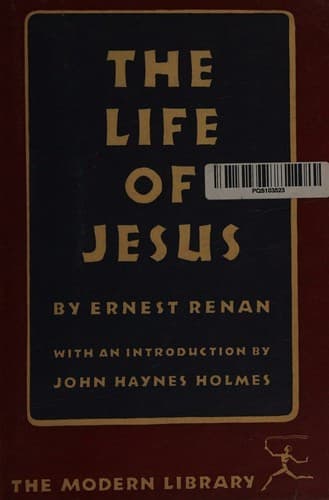
Christian biography -- Palestine; Jesus Christ -- Biography
[Footnote 3: Comp. Matt. vii. 10, xiv. 17, and following, xv. 34, and
following; Mark vi. 38, and following; Luke ix. 13, and following, xi.
11, xxiv. 42; John vi. 9, and following, xxi. 9, and following. The
district round Lake Tiberias is the only place in Palestine where fish
forms a considerable portion of the diet.]
[Footnote 4: John xxi. 13; Luke xxiv. 42, 43. Compare the oldest
representations of the Lord's Supper, related or corrected by M. de
Rossi, in his dissertation on the [Greek: ICHTHYS] (_Spicilegium
Solesmense_ de dom Pitra, v. iii., p. 568, and following). The meaning
of the anagram which the word [Greek: ICHTHYS] contains, was probably
combined with a more ancient tradition on the place of fish in the
Gospel repasts.]
Their repasts were among the sweetest moments of the infant community.
At these times they all assembled; the master spoke to each one, and
kept up a charming and lively conversation. Jesus loved these seasons,
and was pleased to see his spiritual family thus grouped around
him.[1] The participation of the same bread was considered as a kind
of communion, a reciprocal bond. The master used, in this respect,
extremely strong terms, which were afterward taken in a very literal
sense. Jesus was, at the same time, very idealistic in his
conceptions, and very materialistic in his expression of them. Wishing
to express the thought that the believer only lives by him, that
altogether (body, blood, and soul) he was the life of the truly
faithful, he said to his disciples, "I am your nourishment"--a phrase
which, turned in figurative style, became, "My flesh is your bread, my
blood your drink." Added to this, the modes of speech employed by
Jesus, always strongly subjective, carried him still further. At
table, pointing to the food, he said, "I am here"--holding the
bread--"this is my body;" and of the wine, "This is my blood"--all
modes of speech which were equivalent to, "I am your nourishment."
[Footnote 1: Luke xxii. 15.]
Public-domain text, read in full here on John Shaqi.
Reviews
Reviews
No reviews yet
Be the first to share your thoughts on this work.
Elsewhere in the archive
Join the Discussion
Join the discussion
Sign in to leave a comment or review.
Sign InorCreate an account