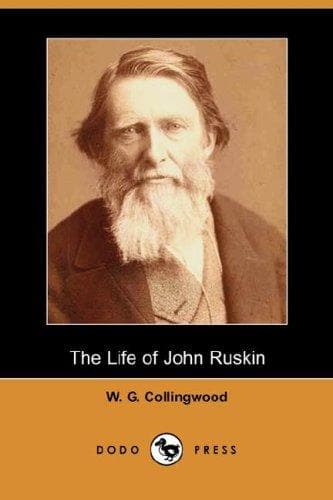
The Life of John RuskinCollingwood, W. G. (William Gershom)
Philosophy
The Life of John Ruskin
Collingwood, W. G. (William Gershom)
Authors, English -- 19th century -- Biography; Ruskin, John, 1819-1900
"I am still very unwell, and tormented between the longing for rest
and lovely life, and the sense of this terrific call of human crime
for resistance and of human misery for help, though it seems to me
as the voice of a river of blood which can but sweep me down in the
midst of its black clots, helpless."
Sentences like these, passages here and there in the last volume of
"Modern Painters," and still more, certain passages omitted from that
volume, show that about 1860 something of a cloud had been settling over
him,--a sense of the evil of the world, a horror of great darkness. In
his earlier years, his intense emotion and vivid imagination had enabled
him to read into pictures of Tintoret or Turner, into scenes of nature
and sayings of great books, a meaning or a moral which he so vividly
communicated to the reader as to make it thenceforward part and parcel
of the subject, however it came there to begin with. It is useless to
wonder whether Turner, for instance, consciously meant what Ruskin found
in his works. A great painter does not paint without thought, and such
thought is apt to show itself whether he will or no. But it needs
imaginative sympathy to detect and describe the thought. And when that
sympathy was given to suffering, to widespread misery, to crying wrongs;
joined also with an intense passion for justice, which had already shown
itself in the defence of slighted genius and neglected art; and to the
Celtic temperament of some highstrung seer and trance-prophesying bard;
it was no wonder that Ruskin became like one of the hermits of old, who
retreated from the world to return upon it with stormy messages of
awakening and flashes of truth more impressive, more illuminating than
the logic of schoolmen and the state-craft of the wise.
And then he began to take up an attitude of antagonism to the world, he
who had been the kindly helper and minister of delightful art. He began
to call upon those who had ears to hear to come out and be separate
from the ease and hypocrisy of Vanity Fair. Its respectabilities, its
orthodoxies, he could no longer abide. Orthodox religion, orthodox
morals and politics, orthodox art and science, alike he rejected; and
was rejected by each of them as a brawler, a babbler, a fanatic, a
heretic. And even when kindly Oxford gave him a quasi-academical
position, it did not bring him, as it brings many a heretic, back to the
fold.
In this period of storm and stress he stood alone. The old friends of
his youth were one by one passing away, if not from intercourse, still
from full sympathy with him in his new mood. His parents were no longer
the guides and companions they had been; they did not understand the
business he was about. And so he was left to new associates, for he
could not live without some one to love,--that was the nature of the
man, however lonely in his work and wanderings.
Public-domain text, read in full here on John Shaqi.
Reviews
Reviews
No reviews yet
Be the first to share your thoughts on this work.
Elsewhere in the archive
Join the Discussion
Join the discussion
Sign in to leave a comment or review.
Sign InorCreate an account