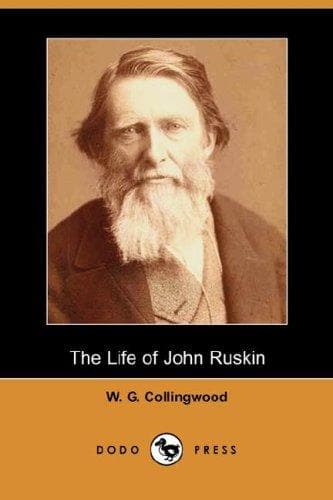
The Life of John RuskinCollingwood, W. G. (William Gershom)
Philosophy
The Life of John Ruskin
Collingwood, W. G. (William Gershom)
Authors, English -- 19th century -- Biography; Ruskin, John, 1819-1900
At that time many distinguished foreign geologists were working at the
Alps; but little of conclusive importance had been published, except in
papers embedded in Transactions of various societies. Professor Alphonse
Favre's great work did not appear until 1867, and the "Mechanismus der
Gebirgsbildung" of Professor Heim not till 1878; so that for an English
public the subject was a fresh one. To Ruskin it was familiar: he had
been elected a Fellow of the Geological Society in 1840, at the age of
twenty-one; he had worked through Savoy with his Saussure in hand nearly
thirty years before, and, many a time since that, had spent the
intervals of literary business in rambling and climbing with the hammer
and note-book. In the field he had compared Studer's meagre sections,
and consulted the available authorities on physical geology, though he
had never entered upon the more popular sister-science of palaeontology.
He left the determination of strata to specialists: his interest was
fixed on the structure of mountains--the relation of geology to scenery;
a question upon which he had some right to be heard, as knowing more
about scenery than most geologists, and more about geology than most
artists.
As examples of Savoy mountains this lecture described in detail the
Salève, on which he had been living for two winters, and the Brezon, the
top of which he had tried to buy from the commune of Bonneville--one of
his many plans for settling among the Alps. The commune thought he had
found a gold-mine up there, and raised the price out of all reason.
Other attempts to make a home in the châteaux or chalets of Savoy were
foiled, or abandoned, like his earlier idea to live in Venice. But his
scrambles on the Salève led him to hesitate in accepting the explanation
given by Alphonse Favre of the curious north-west face of steeply
inclined vertical slabs, which he suspected to be created by cleavage,
on the analogy of other Jurassic precipices. The Brezon--_brisant_,
breaking wave--he took as type of the billowy form of limestone Alps in
general, and his analysis of it was serviceable and substantially
correct.
Public-domain text, read in full here on John Shaqi.
Reviews
Reviews
No reviews yet
Be the first to share your thoughts on this work.
Elsewhere in the archive
Join the Discussion
Join the discussion
Sign in to leave a comment or review.
Sign InorCreate an account