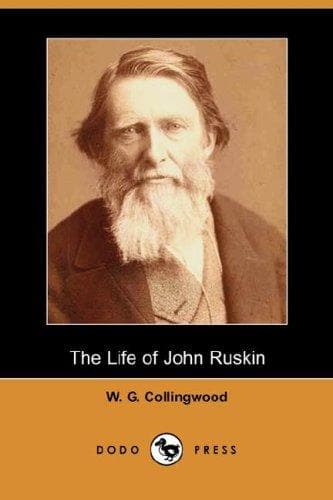
The Life of John RuskinCollingwood, W. G. (William Gershom)
Philosophy
The Life of John Ruskin
Collingwood, W. G. (William Gershom)
Authors, English -- 19th century -- Biography; Ruskin, John, 1819-1900
"We had a lovely evening here yesterday, and the children enjoyed
and understood it better than anything they have yet seen among the
Alps. Constance was in great glory in a little walk I took her in
the twilight through the upper meadows: the Staubbach seen only as
a grey veil suspended from its rock, and the great Alps pale above
on the dark sky. She condescended nevertheless to gather a great
bunch of the white catchfly,--to make 'pops' with,--her friend
Marie at the Giesbach having shown her how a startling detonation
may be obtained, by skilful management, out of its globular calyx.
"This morning is not so promising,--one of the provoking ones which
will neither let you stay at home with resignation, nor go anywhere
with pleasure. I'm going to take the children for a little quiet
exploration of the Wengern path, to see how they like it, and if
the weather betters--we may go on. At all events I hope to find an
Alpine rose or two."
In June, 1866, the Professorship of Poetry at Oxford was vacant; and
Ruskin's friends were anxious to see him take the post. He, however,
felt no especial fitness or inclination for it, and did not stand. Three
years later he was elected to a Professorship that at this time had not
been founded.
After spending June in the Oberland, he went homewards through Berne,
Vevey and Geneva, to find his private secretary with a bundle of begging
letters, and his friend Carlyle busy with the defence of Governor Eyre.
In 1865 an insurrection of negroes at Morant Bay, Jamaica, had
threatened to take the most serious shape, when it was stamped out by
the high-handed measures of Mr. Eyre. After the first congratulations
were over another side to the question called for a hearing. The Baptist
missionaries declared that among the negroes who were shot and hanged
_in terrorem_ were peaceable subjects, respectable members of their own
native congregations, for whose character they could vouch; they added
that the gravity of the situation had been exaggerated by private enmity
and jealousy of their work and creed. A strong committee was formed
under Liberal auspices, supported by such men as John Stuart Mill and
Thomas Hughes, the author of "Tom Brown's Schooldays"--men whose motive
was above suspicion--to bring Mr. Eyre to account.
Public-domain text, read in full here on John Shaqi.
Reviews
Reviews
No reviews yet
Be the first to share your thoughts on this work.
Elsewhere in the archive
Join the Discussion
Join the discussion
Sign in to leave a comment or review.
Sign InorCreate an account