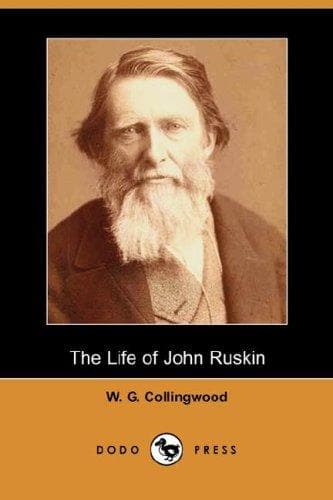
The Life of John RuskinCollingwood, W. G. (William Gershom)
Philosophy
The Life of John Ruskin
Collingwood, W. G. (William Gershom)
Authors, English -- 19th century -- Biography; Ruskin, John, 1819-1900
Carlyle, who admired the strong hand, and had no interest in Baptist
missionaries, accepted Mr. Eyre as the saviour of society in his West
Indian sphere; and there were many, both in Jamaica and at home, who
believed that, but for his prompt action, the white population would
have been massacred with all the horrors of a savage rebellion. Ruskin
had been for many years the ally of the Broad Church and Liberal party.
But he was now coming more and more under the personal influence of
Carlyle; and when it came to the point of choosing sides, declared
himself, in a letter to the _Daily Telegraph_ (December 20th, 1865), a
Conservative and a supporter of order; and joined the Eyre Defence
Committee with a subscription of £100. The prominent part he took, for
example, in the meeting of September, 1866, was no doubt forced upon him
by his desire to save Carlyle, whose recent loss and shaken nerves made
such business especially trying to him. Letters of this period remain,
in which Carlyle begs Ruskin to "be diligent, I bid you!"--and so on,
adding, "I must absolutely _shut up_ in that direction, to save my
sanity." And so it fell to the younger man to work through piles of
pamphlets and newspaper correspondence, to interview politicians and men
of business, and--what was so very foreign to his habits--to take a
leading share in a party agitation.
But in all this he was true to his Jacobite instincts. He had been
brought up a Tory; and though he had drifted into an alliance with the
Broad Church and philosophical Liberals, he was never one of them. Now
that his father was gone, perhaps he felt a sort of duty to own himself
his father's son; and the failure of liberal philanthropy to realise his
ideals, and of liberal philosophy to rise to his economic standards,
combined with Carlyle to induce him to label himself Conservative. But
his conservatism could not be accepted by the party so called.
Fortunately, he did not need or ask their recognition. He took no
interest in party politics, and never in his life voted at a
Parliamentary election. He only meant to state in the shortest terms
that he stood for loyalty and order.
CHAPTER VII
"TIME AND TIDE" (1867)
Public-domain text, read in full here on John Shaqi.
Reviews
Reviews
No reviews yet
Be the first to share your thoughts on this work.
Elsewhere in the archive
Join the Discussion
Join the discussion
Sign in to leave a comment or review.
Sign InorCreate an account