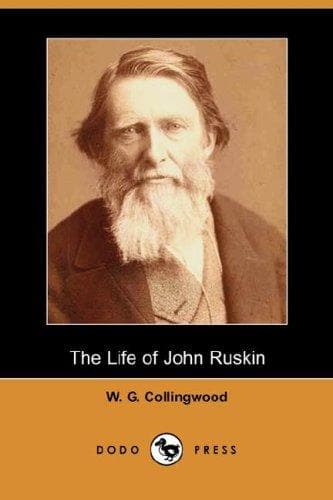
The Life of John RuskinCollingwood, W. G. (William Gershom)
Philosophy
The Life of John Ruskin
Collingwood, W. G. (William Gershom)
Authors, English -- 19th century -- Biography; Ruskin, John, 1819-1900
The series of letters published as "Time and Tide by Weare and Tyne"
were addressed[13] to Thomas Dixon, a working cork-cutter of Sunderland,
whose portrait by Professor Legros is familiar to visitors at the South
Kensington Museum. He was one of those thoughtful, self-educated working
men in whom, as a class, Ruskin had been taking a deep interest for the
past twelve years, an interest which had purchased him a practical
insight into their various capacities and aims, and the right to speak
without fear or favour. At this time there was an agitation for
Parliamentary reform, and the better representation of the working
classes; and it was on this topic that the letters were begun, though
the writer went on to criticise the various social ideals then popular,
and to propose his own. He had already done something of the sort in
"Unto this Last"; but "Time and Tide" is much more complete, and the
result of seven years' further thought and experience. His "Fors
Clavigera" is a continuation of these letters, but written at a time
when other work and ill health broke in upon his strength. "Time and
Tide" is not only the statement of his social scheme as he saw it in his
central period, but, written as these letters were--at a stroke, so to
speak--condensed in exposition and simple in language, they deserve the
most careful reading by the student of Ruskin.
[Footnote 13: During February, March and April, 1867, and published in
the _Manchester Examiner_ and _Leeds Mercury_.]
Before this work was ended, Carlyle had come back from Mentone to
Chelsea, and was begging his friend, in the warmest terms, to come and
see him. Shortly afterward, a passage which Ruskin would not retract
gave offence to Carlyle. But the difference was healed, and later years
reveal the sage of Chelsea as kindly and affectionate as ever. This
friendship between the two greatest writers of their age, between two
men of vigorous individuality, outspoken opinions, and widely different
tastes and sympathies, is a fine episode in the history of both.
In May, Ruskin was invited to Cambridge to receive the honorary degree
of LL.D., and to deliver the Rede Lecture. The _Cambridge Chronicle_ of
May 24th, 1867, says: "The body of the Senate House was quite filled
with M.A.'s and ladies, principally the latter, whilst there was a large
attendance of undergraduates in the galleries, who gave the lecturer a
most enthusiastic reception." A brief report of the lecture was printed
in the newspaper; but it was not otherwise published, and the manuscript
seems to have been mislaid for thirty years. I take the liberty of
copying the opening sentences as a specimen of that Academical oratory
which Mr. Ruskin then adopted, and used habitually in his earlier
lectures at Oxford.
The title of the discourse was "The Relation of National Ethics to
National Arts."
Public-domain text, read in full here on John Shaqi.
Reviews
Reviews
No reviews yet
Be the first to share your thoughts on this work.
Elsewhere in the archive
Join the Discussion
Join the discussion
Sign in to leave a comment or review.
Sign InorCreate an account