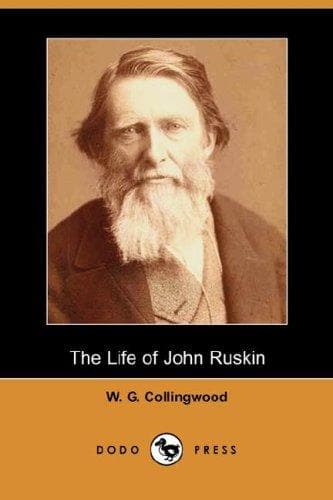
The Life of John RuskinCollingwood, W. G. (William Gershom)
Philosophy
The Life of John Ruskin
Collingwood, W. G. (William Gershom)
Authors, English -- 19th century -- Biography; Ruskin, John, 1819-1900
It was not strictly academic, the way he used to come in, with a little
following of familiars and assistants,--exchange recognition with
friends in the audience, arrange the objects he had brought to
show,--fling off his long sleeved Master's gown, and plunge into his
discourse. His manner of delivery had not altered much since the time of
the Edinburgh Lectures. He used to begin by reading, in his curious
intonation, the carefully-written passages of rhetoric, which usually
occupied only about the half of his hour. By-and-by he would break off,
and with quite another air extemporise the liveliest interpolations,
describing his diagrams or specimens, restating his arguments,
re-enforcing his appeal. His voice, till then artificially cadenced,
suddenly became vivacious; his gestures, at first constrained, became
dramatic. He used to act his subject, apparently without premeditated
art, in the liveliest pantomime. He had no power of voice-mimicry, and
none of the ordinary gifts of the actor. A tall and slim figure, not yet
shortened from its five feet ten or eleven by the habitual stoop, which
ten years later brought him down to less than middle height; a stiff,
blue frock-coat; prominent, half-starched wristbands, and tall collars
of the Gladstonian type; and the bright blue stock which every one knows
for his heraldic bearing: no rings or gewgaws, but a long thin gold
chain to his watch:--plain old-English gentleman, neither fashionable
bourgeois nor artistic mountebank.
But he gave himself over to his subject with such unreserved intensity
of imaginative power, he felt so vividly and spoke so from the heart,
that he became whatever he talked about, never heeding his professorial
dignity, and never doubting the sympathy of his audience. Lecturing on
birds, he strutted like the chough, made himself wings like the swallow;
he was for the moment a cat, when he explained (not "in scorn") that
engraving was the "art of scratch." If it had been an affectation of
theatric display, we "emancipated school-boys," as the Master of
University used to call us, would have seen through it at once, and
scorned him. But it was so evidently the expression of his intense
eagerness for his subject, so palpably true to his purpose, and he so
carried his hearers with him, that one saw in the grotesque of the
performance only the guarantee of sincerity.
Public-domain text, read in full here on John Shaqi.
Reviews
Reviews
No reviews yet
Be the first to share your thoughts on this work.
Elsewhere in the archive
Join the Discussion
Join the discussion
Sign in to leave a comment or review.
Sign InorCreate an account