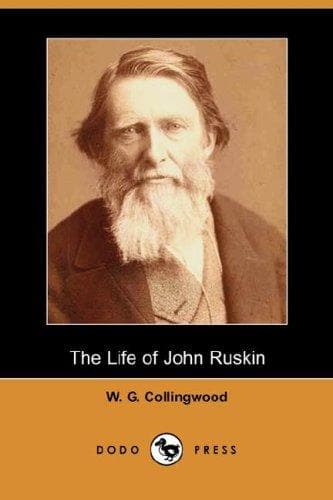
The Life of John RuskinCollingwood, W. G. (William Gershom)
Philosophy
The Life of John Ruskin
Collingwood, W. G. (William Gershom)
Authors, English -- 19th century -- Biography; Ruskin, John, 1819-1900
He had not fully recovered before he heard that W.J. Linton, the poet
and wood-engraver, wished to sell a house and land at the very place:
£1,500, and it could be his. Without question asked he bought it at
once; and as it would be impossible to lecture at Oxford so soon after
his illness, he set off, before the middle of September, with his
friends the Hilliards to visit his new possession. They found a
rough-cast country cottage, old, damp, decayed; smoky chimneyed and
rat-riddled; but "five acres of rock and moor and streamlet; and," he
wrote, "I think the finest view I know in Cumberland or Lancashire, with
the sunset visible over the same."
The spot was not, even then, without its associations: Gerald Massey the
poet, Linton, and his wife Mrs. Lynn Linton the novelist, Dr. G.W.
Kitchin (Dean of Durham) had lived and worked there, and Linton had
adorned it outside with revolutionary mottoes--"God and the people," and
so on. It had been a favourite point of view of Wordsworth's; his "seat"
was pointed out in the grounds. Tennyson had lived for a while close by:
his "seat," too, was on the hill above Lanehead.
But the cottage needed thorough repair, and that cost more than
rebuilding, not to speak of the additions of later years, which have
ended by making it into a mansion surrounded by a hamlet. And there was
the furnishing; for Denmark Hill, where his mother lived, was still to
be headquarters. Ruskin gave carte-blanche to the London upholsterer
with whom he had been accustomed to deal; and such expensive articles
were sent that when he came down for a month next autumn, he reckoned
that, all included, his country cottage had cost him not less than
£4,000.
But he was not the man to spend on himself without sharing his wealth
with others. On November 22nd, Convocation accepted a gift from the
Slade Professor of £5,000 to endow a mastership of drawing at Oxford, in
addition to the pictures and "copies" placed in the schools; he had set
up a relative in business with £15,000, which was unfortunately lost;
and at Christmas he gave £7,000, the tithe of his remaining capital, to
the St. George's Fund; of which more hereafter.
On November 23rd he was elected Lord Rector of St. Andrew's University,
by 86 votes against 79 for Lord Lytton. After the election it was
discovered that, by the Scottish Universities Act of 1858, no one
holding a professorship at a British University was eligible. Professor
Ruskin was disqualified, and gave no address; and Lord Neaves was chosen
in his place.
Mrs. Ruskin was now ninety years of age; her sight was nearly gone, but
she still retained her powers of mind, and ruled with severe kindliness
her household and her son. Her old servant Anne had died in March. Anne
had nursed John Ruskin as a baby, and had lived with the family ever
since, devoted to them, and ready for any disagreeable task--
Public-domain text, read in full here on John Shaqi.
Reviews
Reviews
No reviews yet
Be the first to share your thoughts on this work.
Elsewhere in the archive
Join the Discussion
Join the discussion
Sign in to leave a comment or review.
Sign InorCreate an account