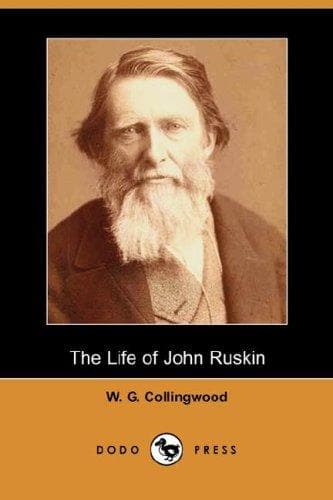
The Life of John RuskinCollingwood, W. G. (William Gershom)
Philosophy
The Life of John Ruskin
Collingwood, W. G. (William Gershom)
Authors, English -- 19th century -- Biography; Ruskin, John, 1819-1900
"So that she was never quite in her glory," "Præterita" says, "unless
some of us were ill. She had also some parallel speciality for _saying_
disagreeable things, and might be relied upon to give the extremely
darkest view of any subject, before proceeding to ameliorative action
upon it. And she had a very creditable and republican aversion to doing
immediately, or in set terms, as she was bid; so that when my mother and
she got old together, and my mother became very imperative and
particular about having her teacup set on one side of her little round
table, Anne would observantly and punctiliously put it always on the
other: which caused my mother to state to me, every morning after
breakfast, gravely, that if ever a woman in this world was possessed by
the Devil, Anne was that woman."
But this gloomy Calvinism was tempered with a benevolence quite as
uncommon. It was from his parents that Ruskin learned never to turn off
a servant, and the Denmark Hill household was as easy-going as the
legendary "baronial" retinue of the good old times. A young friend asked
Mrs. Ruskin, in a moment of indiscretion, what such a one of the ancient
maids did--for there were several without apparent occupation about the
house. Mrs. Ruskin drew herself up and said, "She, my dear, puts out the
dessert."
And yet, in her blindness, she could read character unhesitatingly. That
was, no doubt, why people feared her. When Mr. Secretary Howell, in the
days when he was still the oracle of the Ruskin-Rossetti circle, had
been regaling them with his wonderful tales, after dinner, she would
throw her netting down and say, "How _can you_ two sit there and listen
to such a pack of lies?" She objected strongly, in these later years, to
the theatre; and when sometimes her son would wish to take a party into
town to see the last new piece, her permission had to be asked, and was
not readily granted, unless to Miss Agnew, who was the ambassadress in
such affairs of diplomacy. But while disapproving of some of his worldly
ways, and convinced that she had too much indulged his childhood, the
old lady loved him with all the intensity of the strange fierce lioness
nature, which only one or two had ever had a glimpse of. And when
(December 5th, 1871) she died, trusting to see her husband again--not to
be near him, not to be so high in heaven but content if she might only
_see_ him, she said--her son was left "with a surprising sense of
loneliness." He had loved her truly, obeyed her strictly and tended her
faithfully; and even yet hardly realized how much she had been to him.
He buried her in his father's grave, and wrote upon it, "Here beside my
father's body I have laid my mother's: nor was dearer earth ever
returned to earth, nor purer life recorded in heaven."
CHAPTER II
"FORS" BEGUN (1871-1872)
Public-domain text, read in full here on John Shaqi.
Reviews
Reviews
No reviews yet
Be the first to share your thoughts on this work.
Elsewhere in the archive
Join the Discussion
Join the discussion
Sign in to leave a comment or review.
Sign InorCreate an account