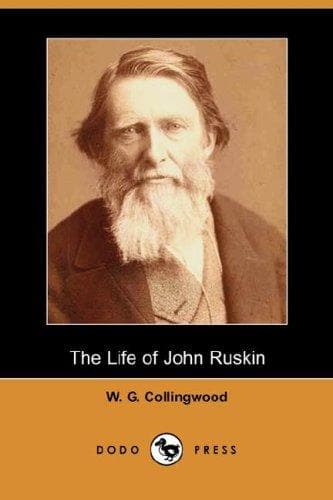
The Life of John RuskinCollingwood, W. G. (William Gershom)
Philosophy
The Life of John Ruskin
Collingwood, W. G. (William Gershom)
Authors, English -- 19th century -- Biography; Ruskin, John, 1819-1900
In September 1875, Ruskin stayed a couple of days at Sheffield to
inspect a cottage at Walkley, in the outskirts of the town, and to make
arrangements for founding the museum--humbly to begin with, but hoping
for speedy increase. He engaged as curator, at a salary of £40 a year
and free lodging on the premises, his former pupil at the Working Men's
College, Henry Swan, who had done occasional work for him in drawing and
engraving. Swan was a Quaker, and a remarkable man in his way;
enthusiastic in his new vocation, and interested in the social questions
which were being discussed in "Fors." Under his care the Museum remained
at Walkley, accumulating material in the tiny and hardly accessible
cottage--being so to speak in embryo, until the way should be clear for
its removal or enlargement, which took place in 1890.
When Ruskin came back on his posting tour of April 1876, he stayed
again at Sheffield, to meet a few friends of Swan's--Secularists,
Unitarians, and Quakers, who professed Communism. They had an interview
(reported in the Sheffield _Daily Telegraph_, April 28th, 1876), which
brought out rather curiously the points of difference between their
opinions and his. They refused to join the Guild because they would not
promise obedience, and help in its objects. Ruskin, however, was willing
to advance theirs. A few weeks afterwards he invited them to choose a
piece of ground for their Communist experiment. They chose a farm of
over thirteen acres at Abbeydale, which the Guild bought in 1877 at a
cost of £2,287 16s.6d. for their use--the communists agreeing to pay the
money back in instalments, without interest, by the end of seven years:
when the farm should be their own.
When it was actually in their hands they found that they knew nothing of
farming--and besides, were making money at trades they did not really
care to abandon. They engaged a man to work the farm for them: and then
another. They were told that the land they had chosen was--for farming
purposes--worthless. Their capital ran short; and they tried to make
money by keeping a tea-garden. The original proposer of the scheme wrote
to Ruskin, who sent £100:--the others returned the money. Ruskin
declined to take it back, and began to perceive that the Communists were
trifling. They had made no attempt to found the sort of community they
had talked about; neither their plans nor his were being carried out. So
when the original proposer and a friend of his named Riley approached
Ruskin again, they found little difficulty in persuading him to try them
as managers. The rest, finding themselves turned out by Riley, vainly
demanded "explanations" from Ruskin, who then was drifting into his
first attack of brain fever. So they declined further connection with
the farm; the Guild accepted their resignation, and undertook for the
time nothing more than to get the land into good condition again.
Public-domain text, read in full here on John Shaqi.
Reviews
Reviews
No reviews yet
Be the first to share your thoughts on this work.
Elsewhere in the archive
Join the Discussion
Join the discussion
Sign in to leave a comment or review.
Sign InorCreate an account