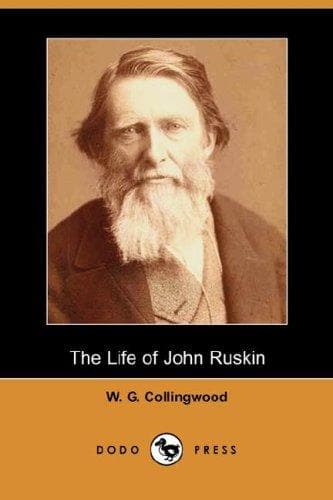
The Life of John RuskinCollingwood, W. G. (William Gershom)
Philosophy
The Life of John Ruskin
Collingwood, W. G. (William Gershom)
Authors, English -- 19th century -- Biography; Ruskin, John, 1819-1900
But this journey did not, as it had been hoped, put him in possession of
his strength like the journey of 1882. Then, he had returned to public
life with new vigour; now, his best hours were hours of feebleness and
depression; and he came home to Brantwood in the last days of the year,
wearied to death, to wait for the end.
CHAPTER X
DATUR HORA QUIETI (1889-1900)
In the summer of 1889, at Seascale, on the Cumberland coast, Ruskin was
still busy upon "Præterita." He had his task planned out to the finish:
in nine more chapters he meant to conclude his third volume with a
review of the leading memories of his life, down to the year 1875, when
the story was to close. Passages here and there were written, material
collected from old letters and journals, and the contents and titles of
the chapters arranged; but the intervals of strength had become fewer
and shorter, and at last, in spite of all his courage and energy, he was
brought face to face with the fact that his powers were ebbing away, and
that head and hand would do their work no more.
He could not finish "Præterita"; but he could not leave it without
record of one companionship of his life, which was, it seemed, all that
was left to him of the old times and the old folks at home. And so,
setting aside the plans he had made, he devoted the last chapter, as his
forebodings told him it must be, to his cousin, Mrs. Arthur Severn, and
wrote the story of "Joanna's Care."
In his bedroom at Seascale, morning after morning, he still worked, or
tried to work, as he had been used to do on journeys farther afield in
brighter days. But now he seemed lost among the papers scattered on his
table; he could not fix his mind upon them, and turned from one subject
to another in despair; and yet patient, and kindly to those with him
whose help he could no longer use, and who dared not show--though he
could not but guess--how heart-breaking it was.
They put the best face upon it, of course: drove in the afternoons about
the country--to Muncaster Castle, to Calder Abbey, where he tried to
sketch once more; and when the proofs of "Joanna's Care" were finally
revised, to Wastwater. But travelling now was no longer restorative.
It added not a little to the misfortunes of the time that two of his
best friends in the outside world were disputing over a third. By nobody
was Carlyle's reputation more valued, and yet he acknowledged that
Froude was but telling the truth in the revelations which so surprised
the public; and much as he admired Norton, he deprecated the attack on
Carlyle's literary executor, whose motives he understood and approved.
In August, after his return to Coniston, the storm-cloud came down upon
him once more. It was only in the summer of 1890 that he was able to get
about. But firmly convinced that his one chance lay in absolute rest and
quiet, he wisely refused any sort of exertion, and was rewarded by a
temporary improvement in health and strength.
Public-domain text, read in full here on John Shaqi.
Reviews
Reviews
No reviews yet
Be the first to share your thoughts on this work.
Elsewhere in the archive
Join the Discussion
Join the discussion
Sign in to leave a comment or review.
Sign InorCreate an account