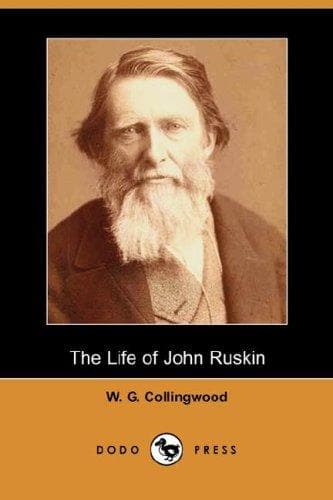
The Life of John RuskinCollingwood, W. G. (William Gershom)
Philosophy
The Life of John Ruskin
Collingwood, W. G. (William Gershom)
Authors, English -- 19th century -- Biography; Ruskin, John, 1819-1900
He had his "bright days," when he would hear business discussed, though
a very little of it was wearisome. It was impossible to bring before him
half the wants and wishes of his correspondents, who could not yet
realise his weakness, and besought the notice they fancied so easily
given. Yet in that weakness one could trace no delusions, none of the
mental break-down which was taken for granted. If he gave an opinion it
was clear and sound enough; of course with the old Ruskinian waywardness
of idea which always puzzled his public. But he knew what he was about,
and knew what was going on. He was like the aged Queen Aud in the saga,
who "rose late and went to bed early, and if anyone asked after her
health she answered sharply."
But all the love and care spent on him could not keep him with us. There
came the Green Yule that makes a fat kirkyard, and in January of 1900
hardly a house in the neighbourhood was free from the plague of
influenza. In spite of strictest precautions it invaded Brantwood.
On the 18th of January he was remarkably well, as people often are
before an illness--"fey," as the old Northern folk-lore has it. Towards
evening, when Mrs. Severn went to him for the usual reading--it was Edna
Lyall's "In the Golden Days"--his throat was irritable and he "ached all
over." They put him to bed and sent for Dr. Parsons, his constant
medical attendant, who found his temperature as high as 102°, and
feared the consequences. But the patient, as he always did, refused to
be considered ill, and ate his dinner, and seemed next day to be really
better. There was no great cause for alarm, though naturally some for
anxiety; and in reasonable hopes of amendment, the slight attack was not
made public.
On Saturday morning, the 20th, all appeared to be going well until about
half-past ten. Suddenly he collapsed and became unconscious. It was the
dreaded failure of heart after influenza. His breathing weakened, and
through the morning and through the afternoon in that historic little
room, lined with his Turners, he lay, falling softly asleep. No efforts
could revive him. There was no struggle; there were no words. The
bitterness of death was spared him. And when it was all over, and those
who had watched through the day turned at last from his bedside, "sunset
and evening star" shone bright above the heavenly lake and the clear-cut
blue of Coniston fells.
Next morning brought messages of hurried condolence, and the Monday such
a chorus from the press as made all the praises of his lifetime seem
trifling and all its blame forgotten. If only, in his years of struggle
and despair, he had known the place he should win!
Public-domain text, read in full here on John Shaqi.
Reviews
Reviews
No reviews yet
Be the first to share your thoughts on this work.
Elsewhere in the archive
Join the Discussion
Join the discussion
Sign in to leave a comment or review.
Sign InorCreate an account