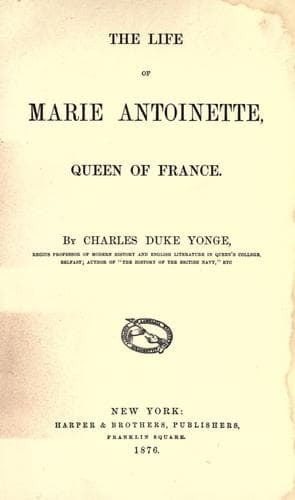
The Life of Marie Antoinette, Queen of FranceYonge, Charles Duke
History
The Life of Marie Antoinette, Queen of France
Yonge, Charles Duke
Marie Antoinette, Queen, consort of Louis XVI, King of France, 1755-1793
The king's speech was followed by another short one from the keeper of the
seals, which received but little attention; and by one of prodigious
length from Necker, which was equally injudicious and unacceptable to his
hearers, both in what it said and in what it omitted. He never mentioned
the question of constitutional reform. He said nothing of what the
Commons, at least, thought still more important--the number of chambers in
which the members were to meet; and, though he dilated at the most profuse
length on the condition of the finances, and on his own success in
re-establishing public credit, they were by no means pleased to hear him
assert that success had removed any absolute necessity for their meeting
at all, and that they had only been called together in fulfillment of the
king's promise, that so the sovereign might establish a better harmony
between the different parts of the Constitution.
Before any business could be proceeded with, it was necessary for the
members to have the writs of their elections properly certified and
registered, for which they were to meet on the following day. We need not
here detail the artifices and assumptions by which the members of the
Third Estate put forward pretensions which were designed to make them
masters of the whole Assembly; nor is it necessary to unfold at length the
combination of audacity and craft, aided by the culpable weakness of
Necker, by which they ultimately carried the point they contended for,
providing that the three orders should deliberate and vote together as one
united body in one chamber. Emboldened by their success, they even
proceeded to a step which probably not one among them had originally
contemplated; and, as if one of their principal objects had been to disown
the authority of the king by which they had been called together, they
repudiated the title of States-general, and invented for themselves a new
name, that of "The National Assembly," which, as it had never been heard
of before, seemed to mark that they owed their existence to the nation,
and not to the sovereign.
But the discussions that took place before all these points were settled,
presented, besides the importance of the conclusion which was adopted,
another feature of powerful interest, since it was in them that the
members first heard the voice of the Count de Mirabeau, who, more than any
other deputy, was supposed during the ensuing year to be able to sway the
whole Assembly, and to hold the destinies of the nation in his hands.
Public-domain text, read in full here on John Shaqi.
Reviews
Reviews
No reviews yet
Be the first to share your thoughts on this work.
Elsewhere in the archive
Join the Discussion
Join the discussion
Sign in to leave a comment or review.
Sign InorCreate an account